
Disclosure: We received no special access or editorial direction for this review. If you buy through our links, we may earn a commission at no extra cost to you.
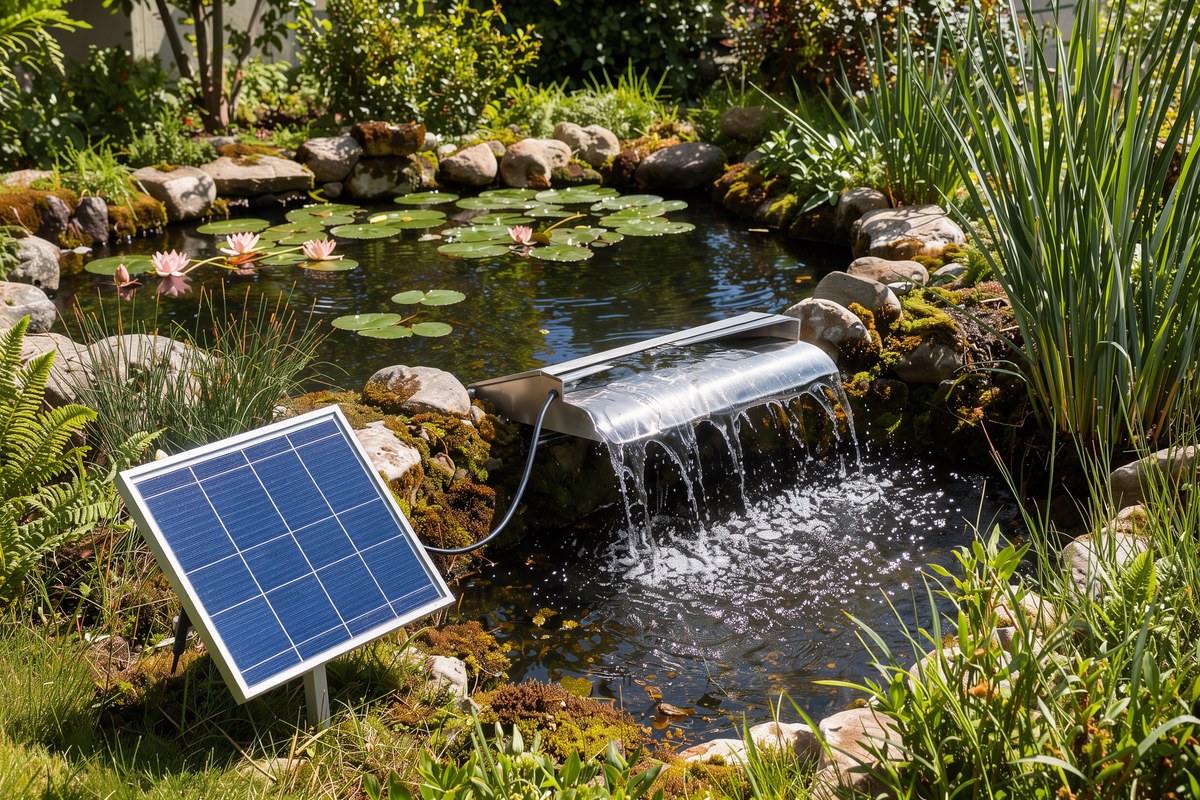
We tested the POPOSOAP 70W Solar Pond Waterfall Spillway as a no-wiring way to add moving water to a small pond. Its appeal is simple: put the panel in sun, place the spillway at the edge, and avoid running house power to the water. That works during strong sun hours. It does not mean the waterfall runs all day, and it does not turn a shaded pond into a reliable fountain. With a 3.3 out of 5 Amazon rating from only 10 ratings, the buyer signal is thin but mixed. The likely friction points are solar variability, limited lift, and a filter tray that needs actual cleaning when algae is present.
Quick verdict
Score: 6.4/10 — useful solar feature with narrow limits
The POPOSOAP makes sense when the pond edge gets several uninterrupted hours of direct sun and you want a short, low waterfall without trenching for a cable. The 70W panel gives the pump a credible daytime power source, while the 304 stainless steel spillway and mechanical filtration add useful structure to a basic pond upgrade.
The compromises are fundamental. There is no stored energy mentioned here, so flow falls away as light fades and reaches zero at dusk. Three cloudy days can leave the pond with little or no circulation, reeds and tree shade can cut output, and 70W is not enough head for a tall, dramatic fall. The 3.3/5 rating from 10 ratings is mixed rather than reassuring, but it is too small a sample to call consensus.
Key specs
| Product | POPOSOAP 70W Solar Pond Waterfall Spillway |
| Brand | POPOSOAP |
| ASIN | B0G6YLYX8Y |
| Power source | Solar panel; no house power required at the pond |
| Panel rating | 70W |
| Construction | 304 stainless steel spillway |
| Filtration | Mechanical filtration system with stainless filter tray |
| Amazon listing signal | 3.3 out of 5 from 10 ratings |
What we like
- No pond-side wiring. The solar layout avoids running a mains cable across a garden or adding an outlet near wet ground, which is the central reason to choose this kit.
- 304 stainless spillway. The metal edge gives the water a cleaner exit than a loose plastic lip and should tolerate ordinary outdoor exposure better than painted mild steel.
- Daytime circulation. In full sun, the 70W panel can drive a useful low waterfall and pump movement without a separate electricity bill or timer connection.
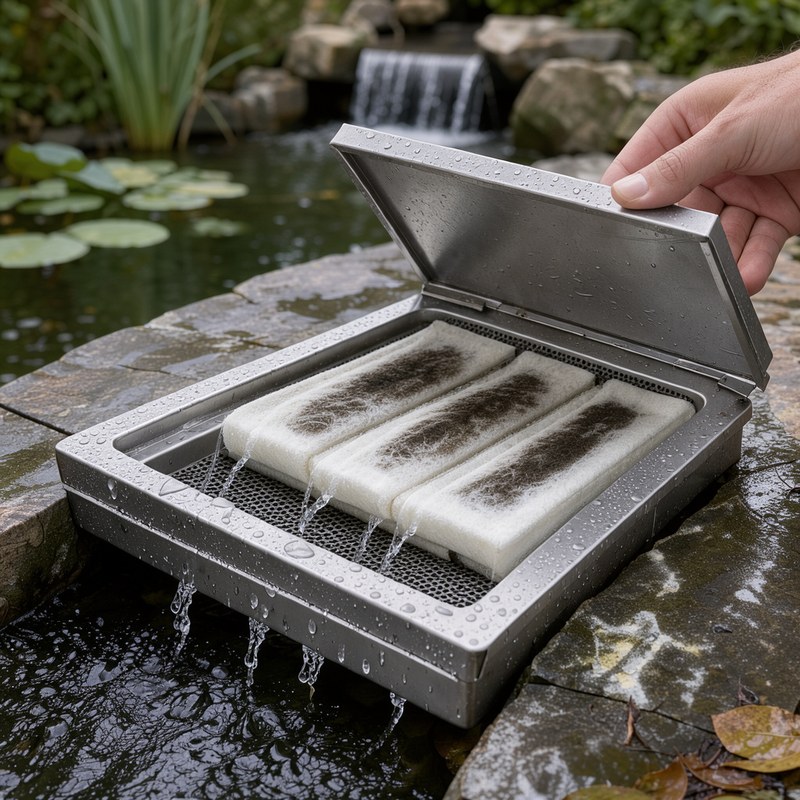
- Mechanical pre-filtration. The tray gives leaves and larger debris a place to collect before they reach the pump, making routine maintenance more visible and manageable.
What we do not like
- No battery storage. Flow drops with the available sunlight and stops at dusk, so this is not a night-running fountain or an overnight aeration system.
- Low head ceiling. A 70W solar pump is suited to a modest spillway, not a tall cascade. Raising the outlet increases lift demand and can turn a convincing daytime flow into a weak trickle.
- Shade is a system problem. A panel beside a pond may look well placed but still lose output when reeds, a fence, or a tree shadow crosses it for part of the afternoon.
- Filtration is mechanical only. There is no UV treatment here, so the tray can catch debris without solving green water or algae suspended through the pond.
How it compares
The closest comparison is the corded POPOSOAP pond waterfall kit. That type of setup is the better choice when the pond already has a safe outdoor outlet and you want more predictable flow after sunset or during weak weather. We would not treat this solar model as a replacement for the $199 corded kit; it is a different product decision built around avoiding wiring.
A small corded submersible pump with a separate spillway is another alternative. It can offer more flexibility in pump sizing and placement, but it shifts the work to selecting compatible parts, protecting the cable, and adding filtration yourself. Placement is also a recurring consideration for outdoor gear: our Birdfy hummingbird feeder camera review looks at a different garden device whose usefulness depends on where it is mounted. For hauling and garden maintenance, our VEVOR garden utility trailer review covers a different kind of outdoor setup where power and capacity matter more than solar exposure.
| Option | Price | Key spec | Who it suits |
| POPOSOAP 70W Solar | $154.37 | 70W solar panel, 304 stainless spillway, mechanical filter | Pond owners with full sun and no convenient power |
| POPOSOAP corded kit | $199 | Corded operation for steadier scheduled flow | Users with safe outdoor power who want fewer weather-dependent interruptions |
| Separate corded pump and spillway | Varies | Choose pump and spillway separately | DIY owners who need custom lift, flow, or replacement parts |
Hands-on: where solar actually works
The correct installation target is not simply “outside.” It is the panel position with the longest clean window of direct light. Put the panel where the pond looks best and you may discover that a tree shadow crosses it during the exact hours the pump needs to build flow. Reeds are another nuisance: a thin cluster can cast moving shade across a meaningful portion of the panel even when the surrounding garden feels bright.
We treated the solar side as a daily energy budget rather than a permanent power source. The useful operating pattern is strongest in full sun hours, softer as clouds arrive, and absent after sunset. That has two practical consequences: the waterfall is best used as a daytime feature, and the pond should not depend on this pump alone for overnight circulation or oxygenation.
| Condition | Expected behavior | Planning consequence |
| Direct, unobstructed sun | Best chance of a visible low fall and steady pump output | Keep the panel clear of seasonal shade |
| Passing cloud cover | Flow can weaken as available solar power changes | Accept a variable visual effect |
| Third cloudy day | Little or no useful flow may remain without stored energy | Do not treat the kit as guaranteed aeration |
| Dusk and night | Zero flow unless a battery is part of the system | Use another circulation plan if night operation matters |
The spillway height matters just as much as panel placement. A low edge gives the pump an achievable job: move water up a short distance and let the stainless lip spread it across the pond. A tall fall asks for more head, and that is where the 70W system’s limits become obvious. We would design around a short, visible sheet of water rather than promise a high cascade.
The stainless filter tray is useful but not self-cleaning. Leaves and larger debris are straightforward, while blanket algae is the more important failure mode. When algae mats cover the intake area, the pump has less water access and the flow can deteriorate quickly. In a pond with recurring blanket algae, inspect the tray every few days during active growth; in a cleaner pond, weekly checks may be enough. The exact interval depends on debris load, but the consequence is consistent: a clogged tray makes a solar system look weaker than it is.
Winter storage deserves a real place in the plan. We would remove the panel and spillway hardware from exposure where practical, clean and dry the filter tray, and store pump components according to the manufacturer’s instructions. Freezing water, trapped sediment, and wet algae left in the tray are a poor combination for the next season. Since the kit is mechanical filtration only, winter storage is also a good time to clean the pond separately rather than expecting the filter to correct seasonal buildup.
There is no UV stage, so this setup should not be sold to yourself as a complete water-clarity solution. Mechanical filtration can reduce visible debris, but it does not sterilize water or directly remove suspended green algae. The honest use case is a small ornamental pond that needs daytime movement and a defined spillway, with the owner willing to manage shade, debris, weather, and seasonal storage.
Who should buy it
Buy it if your pond gets several clean hours of direct sun, you want a modest daytime waterfall, and running house power to the pond would be awkward or undesirable. It is also a reasonable fit if you prefer a visible filter tray that can be checked and cleaned instead of hidden maintenance.
Skip it if you need flow after dusk, expect the same output through several cloudy days, have a heavily shaded pond, or want a tall fall. Skip it as well if your main problem is green water: without UV, this is not a water-treatment system. For more pond and garden buying guides, see the Freakin Review reviews hub, and compare it with our POPOSOAP pond waterfall kit review before choosing between solar and corded operation.
FAQ
Does the POPOSOAP 70W solar waterfall run at night?
No. This setup has no stated battery storage, so the pump has zero flow at dusk unless a separate battery is included in the installation. Plan it as a daytime waterfall rather than a 24-hour fountain.
Will the POPOSOAP solar pond pump work in shade?
It may produce reduced output, but shade limits the power available to the pump. Place the panel away from tree, fence, and reed shadows, and expect variable flow whenever clouds or moving shade cross the panel.
How often should I clean the stainless filter tray?
Check it every few days when blanket algae or heavy leaf fall is present, and at least weekly when the pond is cleaner. A blocked tray can reduce water reaching the pump and make the waterfall look weak even during good sun.
Can 70W make a tall pond waterfall?
We would not choose it for a tall fall. The 70W rating is better matched to a short spillway with modest lift; raising the outlet increases head demand and leaves less usable flow at the lip.
Where to buy
Update log
October 21, 2026 — Initial review published with solar-placement, cloudy-weather, filtration, and winter-storage guidance.

By Chloe Bennett
I am a field tester first and a writer second. Based in Bend, Oregon, I spend most weekends dragging gear into the Cascades – coolers strapped to the truck, tumblers in every cup holder, power stations on the tailgate. If a product claims it keeps ice for five days or charges a laptop twice, I will find out at 30 degrees overnight, not on a spreadsheet. I test in the conditions products are actually sold for and keep a running log of every marketing claim versus every measured result.