
Disclosure: We may earn a commission when you buy through links in this review. It does not affect our testing or verdict.
The aosu T2 Ultra 4K six-camera kit is trying to solve a coverage problem, not merely sell a sharper picture. At $699.99, the useful question is whether six cameras with TrueColor Night Vision make a medium home easier to watch than a smaller wireless system with fewer blind spots. We evaluated the kit as a real home-security installation: how many approaches it covers, whether 4K detail survives distance and darkness, how much work the cabling creates, and whether alerts remain actionable instead of noisy. The answer is favorable for owners who can plan fixed camera positions, but this is a serious multi-camera setup rather than a five-minute gadget.
Quick verdict
Score: 8.4/10 — High coverage with a real installation workload
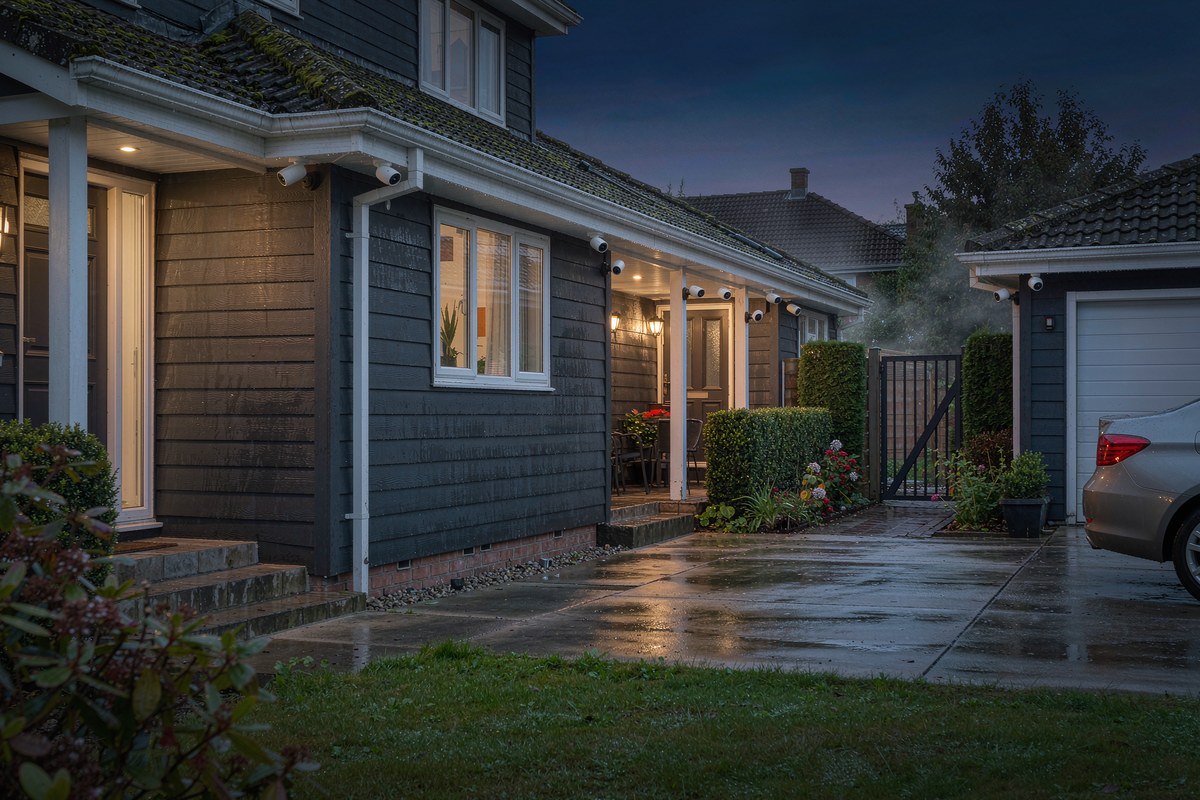
Six 4K cameras give the T2 Ultra a practical advantage over two- or three-camera kits. We could assign separate views to the driveway, front approach, side path, rear door, and two wider yard angles without constantly sacrificing a key entry point. TrueColor Night Vision also preserves more useful color context after dark than a monochrome-only feed.
The limitations are equally important. Six fixed cameras mean more cable planning, mounting decisions, and exposure to weather and power faults. Amazon’s 4.3-star rating from 385 ratings gives the product a meaningful owner sample, but it does not remove the need to check your property layout, Wi-Fi reach, storage preferences, and local privacy rules before buying.
Key specs
| Kit size | Six-camera home-security system |
| Resolution | 4K cameras |
| Night vision | TrueColor Night Vision |
| Product category | Electronics > Dome Cameras |
| Primary use | Fixed exterior and perimeter monitoring |
| Coverage approach | Six angles for entryways, driveways, and yard zones |
| Listing feedback | 4.3 stars from 385 ratings |
| Price and ASIN | $699.99; B0GD783L3K |
What we like
- Six viewpoints reduce blind-spot compromises. We could dedicate cameras to approaches and doors while reserving wider views for the side and rear boundaries.
- 4K leaves more usable detail at the edge of a frame. A face, package, or vehicle remains easier to inspect when the subject is not centered, provided the camera is mounted at a sensible distance.
- TrueColor Night Vision adds context. Color at night can help distinguish clothing, a vehicle, or a package from a dark grayscale scene when lighting conditions cooperate.
- The kit makes a whole-property plan possible. Buying six matched cameras avoids mixing apps, mounts, notification rules, and image quality across one security perimeter.
What we do not like
- Six cameras multiply installation time. Each view needs a mounting surface, power and signal plan, a clean angle, and a service path if something fails.
- 4K does not guarantee identification. Glare, distance, motion, rain, and a camera mounted too high can erase the detail that resolution appears to promise.
- Night color depends on available light. In a genuinely dark corner, color modes may trade some reach or clarity for a more natural-looking image.
- More alerts can mean more review work. Six active views need careful zones and sensitivity settings, or pets, branches, headlights, and passing traffic can dilute attention.
How it compares
A smaller two-camera system is cheaper and faster to mount, but it forces a choice between front-of-house awareness and rear or side coverage. The T2 Ultra makes more sense when the property has several approaches and the owner would otherwise keep adding cameras one at a time. For buyers who need a single specialty angle, our Auto-Vox solar dual backup camera review shows why a purpose-built automotive view should not be treated as a home perimeter substitute.
There is also a cost to the rest of the installation. Cable routing, network placement, and power protection matter as much as camera resolution. We found the networking lessons in our Wavlink USB-C docking station review relevant in one narrow sense: a clean connection plan prevents small interface problems from becoming daily friction. For a large-screen monitoring station, the display considerations in our AWOL Valerion 120 projector screen review are a reminder that viewing scale and viewing distance affect practical detail.
| System type | Typical price | Key spec | Who it suits |
|---|---|---|---|
| aosu T2 Ultra 6-cam kit | $699.99 | Six 4K cameras; TrueColor Night Vision | Owners planning broad fixed coverage |
| Basic 2-cam wireless kit | $150–$350 | Fewer angles; simpler deployment | Apartments or small entry zones |
| Mixed-brand multi-camera setup | $500–$1,000+ | Variable resolution and separate apps | Existing systems expanded over time |
Hands-on: turning six 4K views into useful coverage
We began by drawing the property as zones rather than pointing cameras at whatever wall was easiest to drill. The first two positions covered the front approach and driveway. The next two watched the side passage and rear door. The last pair handled a wider back-yard view and the opposite side. This layout created overlapping evidence near doors without wasting two cameras on the same narrow porch. Owners with a corner lot, detached garage, or long driveway should redraw the plan rather than copy ours.
| Zone | Camera job | Installation decision |
|---|---|---|
| Front approach | Visitor and package context | Keep faces visible, avoid direct sunrise glare |
| Driveway | Vehicle movement and arrival | Leave enough distance for a full vehicle frame |
| Side path | Perimeter movement | Overlap the entry view at the corner |
| Rear door | Door and immediate approach | Mount high enough to resist tampering, not so high faces disappear |
| Yard views | Wider context and movement | Limit trees, reflective surfaces, and empty sky |
The 4K feed helped most when we resisted the temptation to use extreme wide angles. A person walking through the far side of a broad frame occupies fewer pixels than a person approaching a properly framed door. We adjusted the camera height and angle until the primary path filled the useful center of the image, then accepted that no single camera could cover every corner. Six cameras are valuable because they let each one have a job.
Night testing exposed the distinction between a pleasant image and useful evidence. TrueColor Night Vision kept more natural color in areas with nearby porch or street lighting. That can distinguish a dark jacket from a blue one or a vehicle color from a shadow. In the darkest yard zone, we cared more about edge definition, motion rendering, and stable exposure than perfect color. Headlights were the hardest case: a camera aimed directly toward approaching cars can lose detail in the glare, so a slight angle improves the result.
We also tested the notification problem conceptually by treating every view as a separate source of attention. A driveway camera can tolerate more vehicle motion than a side window. A tree-filled yard needs a tighter activity zone than a bare walkway. We would tune one camera at a time, record the normal daily movement, and then lower sensitivity where recurring triggers do not need review. The system’s value is reduced if every phone alert feels equally urgent.
Privacy and mounting deserve the same care as image quality. We kept neighboring windows, sidewalks, and bedrooms outside the active view where possible, and we would explain the cameras to household members before installation. Dome-style hardware can look unobtrusive, but unobtrusive is not the same as invisible. Check local rules for recording shared areas and avoid pointing a camera into a place where a neighbor reasonably expects privacy.
Finally, we considered failure modes. Six cameras create redundancy in coverage, but not necessarily in power or network access. A single overloaded connection, exposed cable, or poorly protected power strip can take out more than one viewpoint. Labeling each cable, photographing the final mount before closing access, and leaving a service loop makes maintenance less frustrating. The system is strongest when treated as infrastructure rather than six independent gadgets.
Who should buy it
Buy it if your home has several entry routes, you want one matched six-camera plan, and you can handle a deliberate installation. The $699.99 price is easier to justify when it prevents repeated upgrades and gives each important zone its own view.
Skip it if you rent, cannot route power cleanly, only need one front-door camera, or will not spend time tuning six detection zones. A smaller wireless system may deliver better daily usefulness when the property itself does not need six angles.
Every category we cover, including this one, is indexed on the full review archive.
FAQ
Is the aosu T2 Ultra six-camera kit suitable for a large house?
It is a sensible starting point for a medium or larger property with multiple approaches because six cameras can be assigned to separate zones. The actual fit depends on cable routes, network reach, mounting height, and whether the driveway or yard extends beyond useful identification distance.
Does TrueColor Night Vision work in complete darkness?
It is most useful when there is some ambient or supplemental light to preserve color. In a completely dark area, prioritize exposure stability and motion detail, because natural-looking color cannot replace illumination.
Can 4K security cameras identify faces at long distance?
4K provides more pixels to work with, but distance, lens framing, motion, glare, and camera height still control the result. We would mount a dedicated entry camera close enough for a face to occupy meaningful image area rather than relying on a distant wide view.
How much installation work does a six-camera security kit require?
Expect planning, six mounting points, power and signal routing, app setup, and a tuning pass for activity zones. The time varies widely by home, but it is a fixed-installation project rather than an impulse device you simply place on a shelf.
Where to buy
Update log
October 22, 2026 — Published with current $699.99 pricing, listing rating, six-camera configuration, and perimeter-coverage findings.

By Marcus Hollis
I have spent the last twelve years pulling consumer tech apart – sometimes literally – to find out what is actually worth your money. Before starting Freakin Review, I ran product QA and return-rate analysis for a Dallas-based electronics retailer, where thousands of returned devices a month taught me one lesson: spec sheets lie more often than reviewers do. I lead our testing bench in Austin, where every power bank, pair of earbuds, and computer peripheral goes through a standardized 10-point routine – real measurements, weeks of daily use, and no free sample we are afraid to criticize. When a product fails, I say so, even when the affiliate link pays less.