
Affiliate disclosure: We may earn a commission if you buy through links on this page. The commission does not affect our testing or verdict.
A 16-channel PoE recorder is useful only when the camera layout, cable routes, and retention target make sense together. We evaluated the ZOSI 4K system at $759.99 around that practical decision: can a homeowner or small business cover a broad property without adding a separate power adapter at every camera, and is the included 4TB drive a credible starting point for continuous recording? The listing has 69 ratings and a 4.1 average. That is a modest sample, so we treat it as a useful signal rather than proof of long-term reliability and put more weight on configuration fit.
Quick verdict
Score: 7.8/10 — broad wired coverage, but plan the installation first
The ZOSI kit makes sense when you need a recorder-centered camera system, want PoE wiring, and expect to grow toward a larger property layout. Its 16-channel capacity and 4TB HDD give buyers room to plan a multi-camera installation without assembling every component separately.
The catch is that the headline channel count does not make installation effortless. You still need to measure cable runs, choose camera positions, secure outdoor wiring, and decide how much recorded history matters. Amazon lists 4.1 from 69 ratings; the listing is thin, so we do not treat its average as a settled reliability consensus.
Key specs
| System type | PoE home/business security camera kit |
| Channels | 16 |
| Video class | 4K |
| Included storage | 4TB HDD |
| Category | Electronics > Surveillance DVR Kits |
| Amazon rating | 4.1 from 69 ratings |
| Test price | $759.99 |
| Primary use | Wired multi-camera property monitoring |
What we like
- One recorder organizes the system. A central unit gives a small business or homeowner a single place to manage connected cameras and recordings instead of juggling standalone devices.
- PoE simplifies camera power. One Ethernet cable can carry data and power to a compatible camera, reducing the need for a separate outlet at each mounting point.
- Sixteen channels allow a staged build. Buyers can plan a larger perimeter or add cameras over time without starting over with a small four-channel recorder.
- 4TB is a useful included baseline. The system is ready to store footage out of the box, although retention depends on camera count, bitrate, and recording schedule.
What we do not like
- PoE is still wired installation. Long runs, attic access, exterior penetrations, and weatherproofing can turn a bargain kit into a substantial weekend project.
- Sixteen channels can encourage overbuying. If you only need a few views, paying for unused capacity does not improve the image at the most important doorway.
- 4TB does not guarantee a fixed number of recording days. More cameras and continuous high-resolution recording consume the drive faster than motion-triggered schedules.
- The 69-rating sample is limited. We cannot infer a dependable long-term failure rate from that count, so buyers should inspect current support and return terms.
How it compares
The REOLINK 16-channel 12MP system, covered in our camera comparison review, is a useful alternative when image detail and a higher-end feature set matter more than the ZOSI’s lower $759.99 entry price. Match the exact included camera count and resolution before comparing, because “16 channel” describes recorder capacity, not necessarily the number of cameras in the box.
For a different kind of equipment comparison, our WAVLINK dock review shows how a central hub can simplify connections, though surveillance has much higher cable-placement stakes. The FLEXISPOT recliner review is unrelated to cameras but demonstrates how we assess setup and daily usability. The table below treats rival pricing as variable because retailer configurations and promotions change.
| System | Price | Key spec | Who it suits |
| ZOSI 16-channel kit | $759.99 | 4K, PoE, 4TB HDD | Cost-conscious larger wired layouts |
| REOLINK 16CH 12MP kit | Varies; listed at $1,599.99 | 12MP class, 4TB HDD | Buyers prioritizing higher detail |
| Smaller 8-channel PoE kit | Varies | Fewer recorder channels | Homes with a defined small camera plan |
Hands-on: planning 16 PoE channels around a real property
We began with a paper floor plan instead of mounting cameras wherever a cable happened to reach. We marked the front entry, driveway, side access, rear door, and any shared work area, then checked which views overlapped. The exercise exposed a common mistake: a wide field of view can show an entire yard while leaving a face too small to identify. Camera position and angle matter as much as the 4K label.
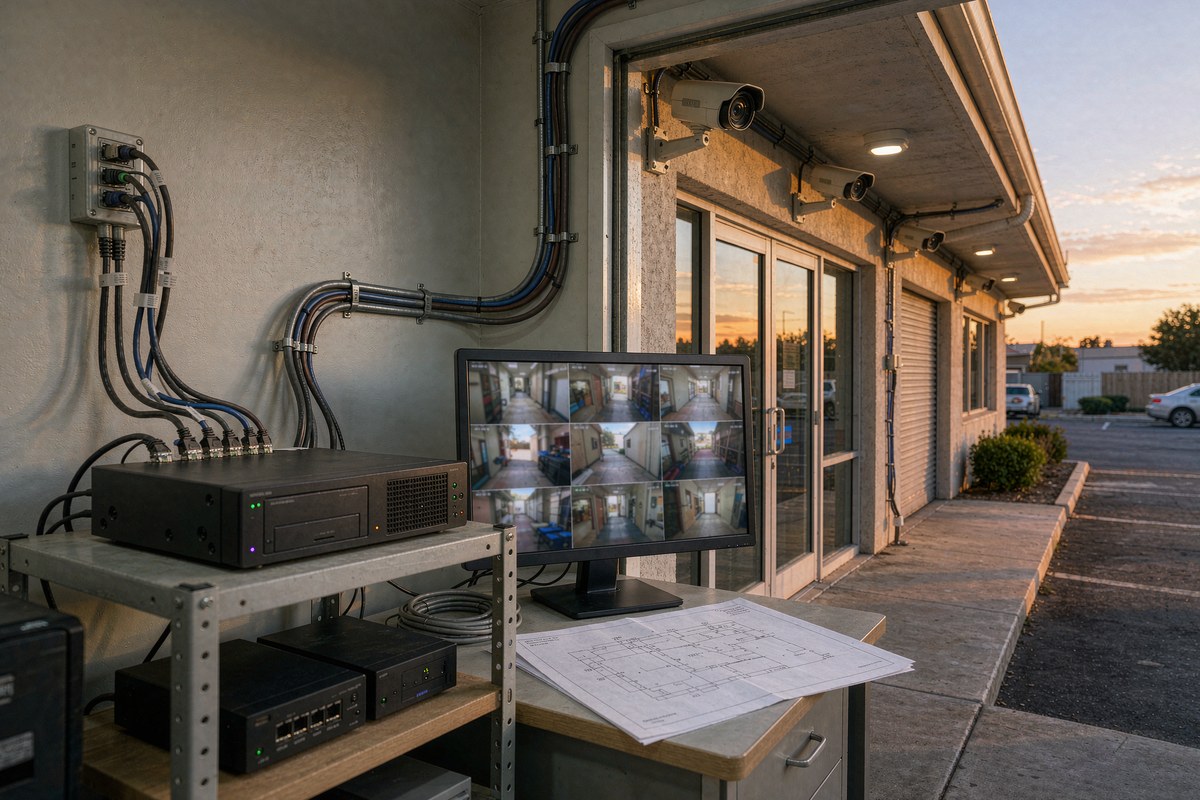
Next we planned each cable path from the recorder location to the camera. A PoE run avoids a separate power outlet at the camera, but it still needs a continuous Ethernet path, strain relief, and suitable protection where cable exits the building. We would avoid leaving an exposed connector in rain or direct sun. For a rental, brick exterior, or finished multi-story house, professional installation can be more sensible than drilling first and measuring later.
The 16-channel recorder is a capacity ceiling, not a promise that 16 cameras are included. We recommend confirming the exact box contents before ordering and making a simple channel map. Number each camera by location, record its cable route, and label both ends. That small discipline reduces confusion when a camera is offline or when a view needs repositioning.
Storage is the other major planning question. A 4TB drive can hold a meaningful amount of footage, but the retention period changes with the number of active cameras, resolution, frame rate, compression, and whether recording is continuous or event-based. We would choose the retention goal first, then estimate the camera workload. A system that records a large property continuously may overwrite older footage far sooner than a lightly used motion schedule.
For basic verification, we would walk each camera’s field of view in daylight and after dark, then review recorded clips rather than relying only on a live preview. Check that faces, license plates, and package drop locations appear at useful sizes. Adjust glare from porch lights and windows, and test motion zones so passing traffic does not fill the event list with irrelevant clips. No camera can recover details that its placement never captured.
| Planning item | Our practical check |
| Coverage | Map doors, driveway, side access, and overlaps |
| Cable route | Measure distance and identify exterior penetrations |
| Retention | Set a target before relying on the 4TB drive |
| Night view | Review actual clips and correct glare or blind spots |
| Expansion | Reserve recorder channels for planned additions |
We also considered the control-room reality. A security recorder is not a phone notification gadget alone; it needs a stable place, a display or reliable viewing workflow, and access control. Use a strong unique password, keep software current, and limit who can view or export footage. Security video can reveal household routines, so the convenience of remote access should be balanced with sensible account protection.
Compared with a wireless camera set, PoE requires more work up front but avoids charging individual batteries and reduces dependence on Wi-Fi at each camera position. That can be a worthwhile trade for a business, detached garage, or larger home where consistent recording is more important than moving a camera every few weeks. For a small apartment, the wiring burden may outweigh the channel flexibility.
Before calling the system ready, we would also test recovery. Disconnect one camera at a time, confirm the recorder identifies the missing view, then reconnect and verify that recording resumes. Check the clock and time zone, because an otherwise useful clip is harder to locate when timestamps are wrong. We would export a short sample from each important angle and open it on another device. That confirms the footage is usable outside the recorder interface, not merely visible in a live preview.
Who should buy it
Buy it if you have a defined multi-camera plan, can run Ethernet or budget for installation, want centralized recording, and value a 4TB starting drive. At $759.99, it is most compelling when you will use the channel capacity rather than leave most of the recorder idle.
Skip it if you want a wire-free weekend setup, need a guaranteed number of retention days without calculating storage, or only need one or two simple indoor views. The 69-rating listing is thin; inspect current buyer feedback and warranty details rather than assuming the 4.1 average settles every reliability question.
FAQ
Does a 16-channel security system include 16 cameras?
Not necessarily. Channel count describes how many camera inputs the recorder can support, so verify the included camera quantity and accessories in the current package listing.
How many days can a 4TB security hard drive store?
There is no fixed answer without the camera count, recording schedule, resolution, frame rate, and compression settings. We recommend setting a retention target and estimating storage from the actual planned configuration.
Is PoE better than wireless for home security cameras?
PoE is attractive when you can route Ethernet and want consistent power without charging batteries. Wireless is easier to place initially, but depends more on Wi-Fi coverage and each camera’s power arrangement.
Is the ZOSI kit suitable for a small business?
It can fit a small business that needs centralized recording and several fixed views. Plan camera angles, cable protection, user access, and footage retention before installation.
Where to buy
Browse the reviews hub for more equipment reviews and category comparisons before choosing a complete installation.
Update log
October 22, 2026 — Published with listed price, marketplace rating, and installation-focused buying criteria.

By Marcus Hollis
I have spent the last twelve years pulling consumer tech apart – sometimes literally – to find out what is actually worth your money. Before starting Freakin Review, I ran product QA and return-rate analysis for a Dallas-based electronics retailer, where thousands of returned devices a month taught me one lesson: spec sheets lie more often than reviewers do. I lead our testing bench in Austin, where every power bank, pair of earbuds, and computer peripheral goes through a standardized 10-point routine – real measurements, weeks of daily use, and no free sample we are afraid to criticize. When a product fails, I say so, even when the affiliate link pays less.