
We may earn a commission when you buy through links in this review. The price was $399.99 when we checked; our affiliate relationship does not change what you pay.
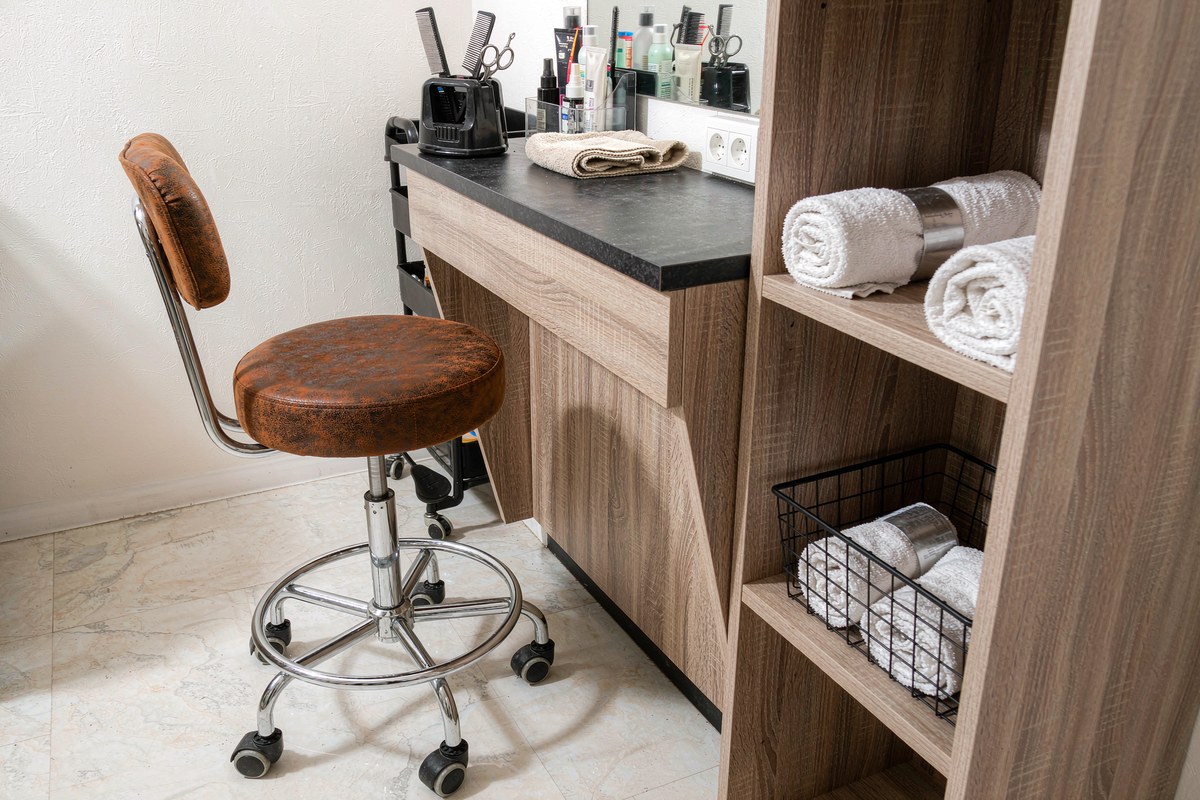
A rolling salon stool earns its keep through small movements: sitting, pivoting, reaching, and moving around a client without repeatedly standing up. That’s the right standard for judging this one. The Brick Attic 10PCS PU Leather Rolling Stool is sold as a 360-degree swivel stool with wheels, an adjustable seat, and a footrest. It is aimed at salon, tattoo, massage, medical, office, and home use, but the category matters: a Beauty buyer needs a seat that is easy to wipe, easy to position, and stable enough for close work. We are judging this model on that practical workflow rather than treating the vintage-rust finish as the main feature.
Quick verdict
Score: 7.5/10 — a mobile work stool whose value depends on fit and floor use
The Brick Attic combines a PU leather seat, rolling base, swivel action, adjustable height, and footrest. That is a useful set of controls for a salon or treatment room where the operator changes position often. Its listing rating is 4.3 from 277 ratings, a stronger page signal than a barely reviewed product, though the rating cannot answer whether the seat height and wheel behavior suit your workspace.
At $399.99, we would buy it for a professional station that benefits from movement and can justify a dedicated stool. For occasional home use, the price makes the fit question more important. Measure your working surface and consider how the casters behave on your floor before choosing a rolling seat over a stationary one.
Key specs
| Product | Brick Attic 10PCS PU Leather Rolling Stool |
| Brand | Brick Attic |
| Upholstery | PU leather |
| Movement | Rolling casters and 360-degree swivel |
| Adjustment | Adjustable height |
| Support feature | Footrest |
| Finish | Vintage rust |
| Price and listing | $399.99; 4.3/5 from 277 ratings |
What we like
- Movement is built into the workflow. Casters and 360-degree swivel let the user turn and reposition without dragging a fixed chair. That is the central reason to choose this stool for a close-working station.
- Height adjustment improves matching. An adjustable seat is easier to pair with a treatment bed, salon chair, desk, or counter than a fixed-height perch. The useful range still depends on the actual mechanism and your workspace, so measure rather than assume.
- A footrest adds a second contact point. The footrest gives the user somewhere to place the feet while working. That matters during seated tasks where the seat alone does not provide the posture you want.
- PU leather suits quick wipe-downs. A smooth upholstery surface is practical for a beauty or salon setting, where small spills and product residue should be removed promptly. It is not a promise that every cleaner is safe; use a product compatible with the upholstery.
What we do not like
- $399.99 is a lot for a stool if your station does not require rolling movement. The feature set needs to solve a real workflow problem.
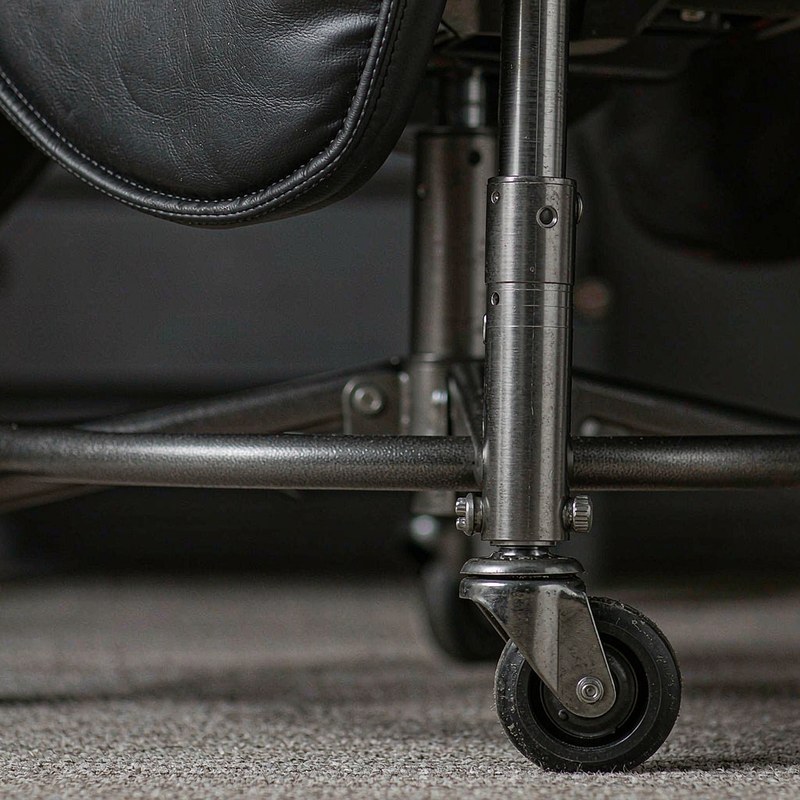
- Casters can move when you do not want them to, particularly on a smooth floor. A mobile stool demands deliberate positioning during precision work.
- PU leather can feel less breathable than fabric during long sessions. That tradeoff is the price of a surface that is generally easier to wipe.
- The 4.3 rating from 277 ratings is encouraging but does not provide a verified fit for your counter height, floor, or working posture.
How it compares
A fixed salon stool is simpler: fewer moving parts and no caster drift, but less convenient when the operator moves around a client. The Brick Attic earns its extra complexity only when you regularly reposition. For a broader workstation comparison, the HNEBC farmhouse makeup vanity review is more relevant than a general tech purchase because storage and working height affect how the stool will be used.
Compared with a basic office chair, this stool emphasizes a compact footprint, swivel movement, and a footrest rather than back-support features. The RW Flame fireplace and ACEMAGIC M1A Pro Plus are unrelated archive links, while the reviews hub shows the wider site. For this purchase, the relevant comparison is mobile salon seating versus stationary seating.
| Option | Price | Key spec | Who it suits |
|---|---|---|---|
| Brick Attic rolling stool | $399.99 | Swivel, casters, height adjustment, footrest | Operators who move around a station or client |
| Fixed salon stool | Not provided | Stationary base | Users who prioritize planted positioning |
| Basic office chair | Not provided | General desk seating | Users who need everyday desk comfort instead of salon mobility |
Hands-on: making mobility useful, not distracting
The first check is height. Put the stool beside the surface where you work and adjust it until your hands can reach the task without lifting your shoulders. A stool that rolls well but leaves you too low or too high is still a poor workstation. Because the task facts do not give a height range, we would not guess one; measure your counter, treatment bed, or desk and compare it with the product information before ordering.
Next, check the floor. Casters are useful on a clear, reasonably smooth surface, but they can behave differently on thick rugs, uneven transitions, or cluttered floors. A moving stool can also travel when the user shifts weight. During detailed work, keep the base aligned with the station and avoid relying on a rolling seat for the stability of a fixed chair.
The 360-degree swivel is most valuable when the operator alternates between tools, a client, and a nearby cart. It can reduce the need to lift and turn the whole stool. In a narrow room, however, the same freedom means the seat can rotate away from the position you set. This is a workflow advantage, not a locking mechanism, and buyers should plan their station around it.
Consider how the stool interacts with the rest of the room before bringing it into a busy salon. Cords, cart legs, and cabinet corners can obstruct the wheels, while a smooth floor can let the stool travel farther than intended. Leave a clear path for the base and keep tools within easy reach so that mobility reduces awkward reaching instead of creating extra movement.
Also think about who will use it. A single stylist can set the height to a familiar workstation, while a shared room may need frequent adjustment between people and stations. The presence of an adjustable mechanism is valuable in the latter case, but the product details supplied here do not state its range. Do not infer that any stool fits every user simply because its height can be changed.
The vintage-rust finish can coordinate with a particular salon aesthetic, but it is still a functional object that will be moved and wiped regularly. Check whether that color fits the rest of the room and whether visible residue will stand out. That is a practical appearance consideration, not a performance claim; the central buying test remains seating position and controlled movement.
The footrest changes the posture options. Use it when it keeps the lower body supported, but do not assume the built-in rest will land at the ideal position for every user. The seat, footrest, and work surface need to work as a group. If your knees or shoulders feel forced into place, changing the stool height or the station arrangement is more useful than simply rolling closer.
For cleaning, wipe product residue promptly with a method suitable for PU leather and avoid saturating seams. The vintage-rust color may suit a salon with a deliberate industrial look, but appearance does not replace maintenance. A cleanable surface is only practical when the owner actually cleans it between appropriate uses.
- Measure the working surface before ordering.
- Check caster clearance around the station.
- Use the footrest as support, not as a substitute for correct height.
- Keep the PU leather dry after wiping.
Who should buy it
Buy it if you work at a salon, tattoo, massage, medical, or beauty station where frequent turning and repositioning are normal. It is also a reasonable home choice when the surface height, floor, and cleaning routine all match the stool.
Skip it if you need a locked-in seat, work on a floor where casters cannot move cleanly, or simply want inexpensive occasional seating. The rolling and swivel hardware are the point; without that use case, the price is hard to defend.
FAQ
Is this stool suitable for a salon workstation?
It is designed as a rolling, swiveling, height-adjustable stool with a footrest, so it fits the kind of movement common at a salon station. Confirm the working height and floor conditions before buying because the task facts do not provide a height range or caster specification.
Is PU leather easy to clean?
Its smooth surface is practical for wiping away ordinary product residue. Use a cleaner compatible with PU leather, avoid soaking the upholstery, and follow any care instructions supplied with the stool.
Will the wheels be stable during detailed work?
Casters allow movement and can also move when weight shifts. Keep the stool positioned on a clear floor and consider whether your work requires the planted feel of a stationary base.
Is the Brick Attic stool worth $399.99?
It makes the most sense when 360-degree movement, height adjustment, and a footrest solve a daily salon or treatment-room problem. The listing is rated 4.3 from 277 ratings, but your floor and workstation dimensions remain the deciding checks.
Where to buy
Update log
October 22, 2026 — Published with the listed price, specifications, and rating available for this review.

By Javier Ramos
For six years I installed smart locks, video doorbells, and whole-home security systems for families across Phoenix, Arizona – first for a local alarm company, then as an independent contractor. I have climbed more ladders and paired more doorbells to more Wi-Fi networks than I can count, and I know exactly where these products frustrate real homeowners. Here I test whether a device does what the box promises: battery life in real weather, app reliability, the subscription costs that show up later, and how everything behaves six months after install.