
Affiliate disclosure: We may earn a commission if you buy through links on this page. That never changes what you pay, and it does not buy our verdict.
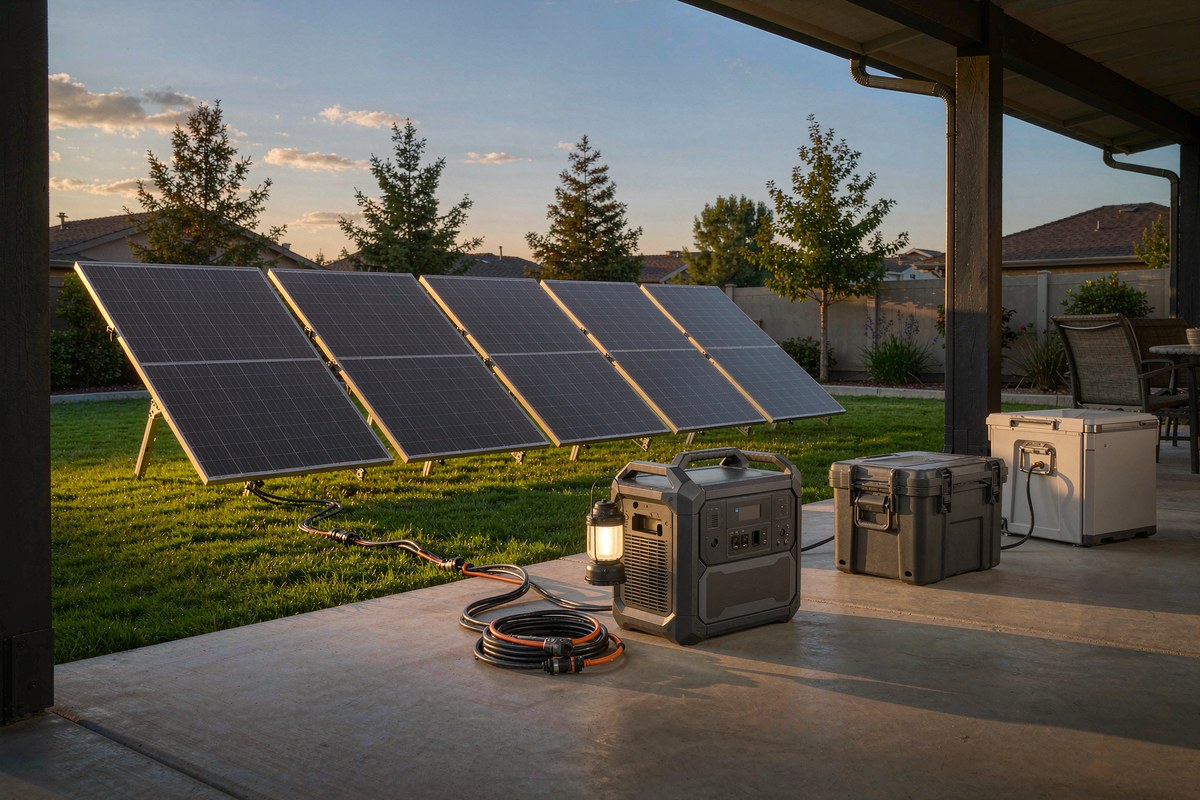
Our decision-useful angle is whether the DELTA Pro Ultra X package with four 400W portable panels is a practical solar-backed generator setup, not merely a large battery with an impressive accessory count. At $9,899, the package targets buyers who want significant stored energy and a way to replenish it away from the grid. We judged it as Patio, Lawn & Garden generator equipment: a system that must be moved, positioned, protected from weather, and managed around real household loads. The listing shows a 4.1 rating from 374 ratings, which is a meaningful reference point but not a complete answer for a high-cost kit with a substantial installation and storage footprint.
Quick verdict
Score: 8.2/10 — a strong solar-ready package if you can manage the footprint
The four 400W panels make this package more self-contained than buying a large power station and figuring out solar later. In the right setting, they can extend the system’s usefulness during a long outage, at a remote property, or during outdoor work where grid charging is inconvenient. The core appeal is not just capacity; it is the combination of stored energy and a repeatable recharge plan.
The tradeoff is that portable panels are still equipment to unfold, angle, secure, cable, and store. Weather, shade, season, and placement affect the energy you collect. At $9,899, buyers should understand that a solar panel package does not guarantee full daily replenishment under every condition. The disclosed 4.1 rating from 374 ratings gives useful owner context, while our score reflects the real-world work around a large solar generator.
Key specs
| Product | EF ECOFLOW Power Station Delta Pro Ultra X with 4x400W Portable Panels |
| Brand | EF ECOFLOW |
| Price tested | $9,899.00 |
| Panel package | Four portable 400W panels |
| Battery class | DELTA Pro Ultra X power station |
| Category | Generators |
| Listing rating | 4.1 from 374 ratings |
| Published listing identifier | B0H2YQTDK7 |
What we like
- Solar is included in the plan. Four 400W panels give the owner a defined recharge setup instead of leaving solar sourcing for a later purchase.
- Useful for extended outages. Stored energy plus daytime generation is a better resilience strategy than relying on one full battery charge.
- Flexible placement. Portable panels can be separated and positioned where the sun is strongest, subject to cable and safety limits.
- Clear purchase scope. The $9,899 package makes it easier to budget for the major hardware than assembling a system from mismatched parts.
What we do not like
- The panels need floor or ground area, favorable sun, and time to position; they are not a passive accessory.
- Clouds, shade, season, and panel angle can reduce real solar harvest substantially.
- Moving and storing four large panels adds handling work and a meaningful space requirement.
- The 4.1 rating from 374 ratings is helpful, but high-cost package buyers still need to verify compatibility and load expectations.
How it compares
Compared with the same power station bought without panels, this package is more useful for buyers who expect to operate away from the grid or through a longer outage. The panel cost is justified only if the owner will deploy them. If a battery will spend most of its life in a garage and be recharged from mains power, a panel bundle may be unnecessary capital.
Compared with a fuel generator, this setup avoids engine noise, exhaust at the point of use, and fuel storage. It is also more dependent on weather and daylight. A fuel generator can replenish energy on demand while fuel lasts, whereas solar requires good placement and patience. Our reviews hub includes outdoor equipment such as a lawn sweeper and a metal shed, both useful comparisons for thinking about storage space and outdoor setup rather than just headline specs.
| Backup option | Price | Key spec | Who it suits |
| DELTA Pro Ultra X with four panels | $9,899 | Four 400W portable panels plus large power station | Owners planning solar-assisted backup |
| Large power station without panels | Usually lower | Stored energy with grid or separate solar charging | Buyers who have another recharge plan |
| Fuel generator | Varies | On-demand engine generation with fuel | Long outages and high loads where fuel is available |
Hands-on: turning four panels into a usable recharge routine
The first reality check is space. Four 400W portable panels are not a small blanket that can be tossed beside the battery. We would choose a flat, stable, sun-exposed area, keep walking paths clear, and consider how the panels will be collected if wind or rain arrives. A backyard, driveway, or open patio may work, but shade from a house, tree, fence, or neighboring structure can change the useful area from hour to hour.
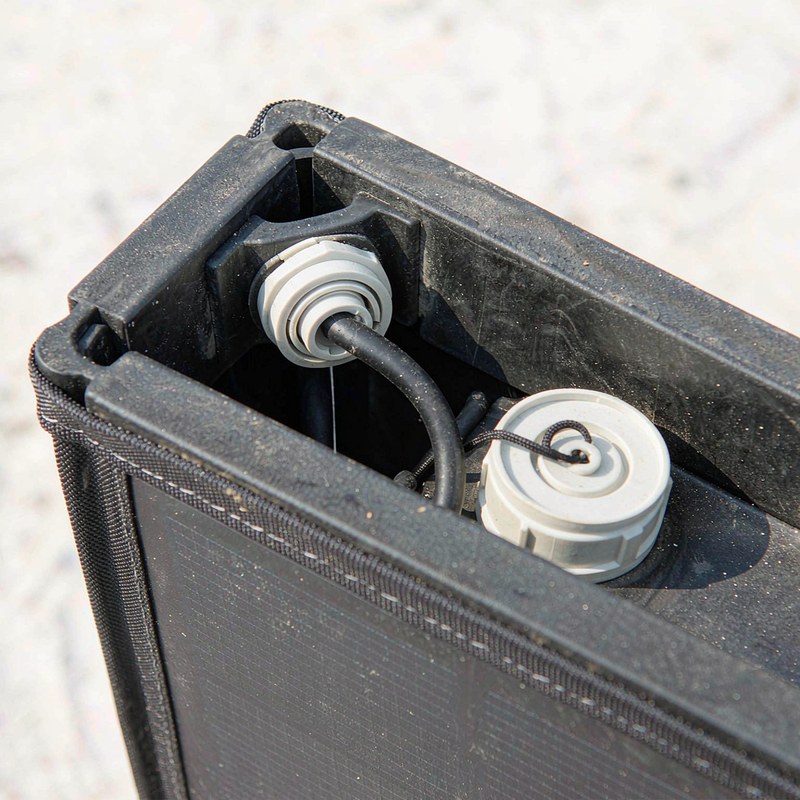
Panel deployment is a sequence rather than a single action. Unpack the panels, support them securely, orient them toward the available sun, connect the cables without creating a trip loop, and check that the power station is receiving input. The best angle changes by season and location. We would not leave the panels unattended in a place where a gust can move them, or run cables through a door that pinches insulation and compromises the path.
Four 400W labels add up to 1,600W of stated panel capacity under ideal conditions. That is a useful ceiling, not a guaranteed harvest. Real collection depends on cloud cover, dust, temperature, angle, orientation, cable losses, and whether all four panels can see the sun at once. The right question is how much energy you collect over a day in your location, not whether a peak number appears briefly on the display.
We would pair solar harvesting with a load priority list. During an outage, run the refrigerator, networking equipment, lights, and other essential loads first. If the panels are producing, use that input to offset active consumption or rebuild reserve. High-demand appliances can consume energy faster than the array replaces it, so a bright afternoon is not permission to run every electric load simultaneously.
Storage is just as important as setup. Keep panels dry, clean, and protected from sharp objects when folded. The power station needs a suitable protected location, while the panels need a rack, shelf, or dedicated area that will not be crushed by yard tools. A kids’ bike review is a reminder of the same practical issue: outdoor equipment claims space long after the purchase decision, and that space must work for the household.
- Panel count: four portable panels.
- Stated panel rating: 400W each, 1,600W combined under ideal conditions.
- Deployment needs: stable supports, sun exposure, safe cable routing, and clear walkways.
- Owner tasks: positioning, checking input, cleaning, folding, and protected storage.
Weather changes the routine. Light cloud may still produce energy, but heavy cloud, rain, shade, and a low winter sun can reduce output. We would never treat the panels as a reason to expose the power station or electrical connections to water. If weather turns, the correct move is to protect the equipment and preserve the battery rather than chase a theoretical wattage number.
Portability is relative. A panel is portable because it can be folded or moved, but four panels plus cables and a large battery are a system with weight and volume. Moving it from a garage to a yard is reasonable when planned; moving it daily for casual charging is more work than many owners expect. This package earns its value when the owner has a repeatable location and a reason to use solar regularly.
We also like the operational clarity of having the panels in the same purchase. Compatibility questions are simpler than when mixing panels, adapters, and a battery months apart. Still, buyers should verify the current product documentation, connector arrangement, input limits, and safe deployment requirements before installation. Package completeness is helpful, not a replacement for reading the instructions.
Who should buy it
Buy it if you want a large battery with a defined 1,600W-class portable solar package and have open, secure space for deployment. It suits homeowners, remote-property users, and outage planners who will actually position the panels, monitor input, and manage loads over more than one day.
Skip it if you have no reliable sun exposure, no storage area, or no interest in handling four panels. A power station without panels or a fuel generator may be more sensible for occasional short outages. Also skip it if you expect the stated panel wattage to guarantee the same harvest in shade or bad weather.
FAQ
How much power do four 400W panels produce?
The stated combined rating is 1,600W under ideal conditions. Actual output varies with sun angle, clouds, shade, temperature, dust, orientation, and system losses, so daily energy collection will be lower and change with weather.
Can the panels stay outside overnight?
We would not leave portable panels deployed overnight without confirming the current instructions and weather protection requirements. Secure them during use and store them protected from rain, wind, impact, and unauthorized handling.
Is this package better than a fuel generator?
It is better for buyers who value quiet, emissions-free operation and can plan around sunlight. A fuel generator may be better for immediate high-load generation during prolonged cloudy weather, provided fuel, ventilation, and local safety requirements are handled correctly.
Do I need a large yard for the four panels?
You need enough stable, sun-exposed space to position all four without blocking paths or creating unsafe cable runs. A smaller area may work if the panels can be arranged safely, but shade and cramped placement reduce the benefit of the bundle.
Where to buy
Update log
October 22, 2026 — Published with current package price, four 400W panels, and the disclosed 4.1 rating from 374 ratings.

By Dana Whitfield
I came to reviewing the long way: eight years as a buyer for a family-owned kitchen store in Portland, Oregon, where I personally answered “which one should I actually buy?” a few hundred times a week. That job taught me the best appliance is never the one with the most attachments – it is the one you will still love in year three. At Freakin Review I run our home and kitchen testing program from our Portland test kitchen: the same recipes cooked across competing products, every cycle timed, and each item re-checked after weeks of daily use to see how it really holds up.