
Affiliate disclosure: We may earn a commission if you buy through links on this page. That does not change what you pay or how we score the product.
The decision here is whether a high-capacity tankless reverse osmosis system is worth giving up cabinet space and a lower entry price for. We tested the Frizzlife 1200GPD Reverse Osmosis Water Filter as an under-sink system, paying attention to the things that matter after installation: how much room the hardware takes, how clearly the faucet communicates, and whether a large household gets a practical improvement over a conventional RO setup. The headline numbers are ambitious, but the useful question is simpler: does this system make filtered water easier to live with every day?
At $679.99, it is not a casual kitchen upgrade. The listing has a 4.6-star rating from 2,487 ratings, so there is more owner feedback here than with many specialist filtration products. Still, an online rating cannot tell you whether your cabinet has the right connections or whether you are comfortable scheduling filter changes. That is where this review focuses.
Quick verdict
Score: 8.2/10 — high-capacity RO for busy kitchens
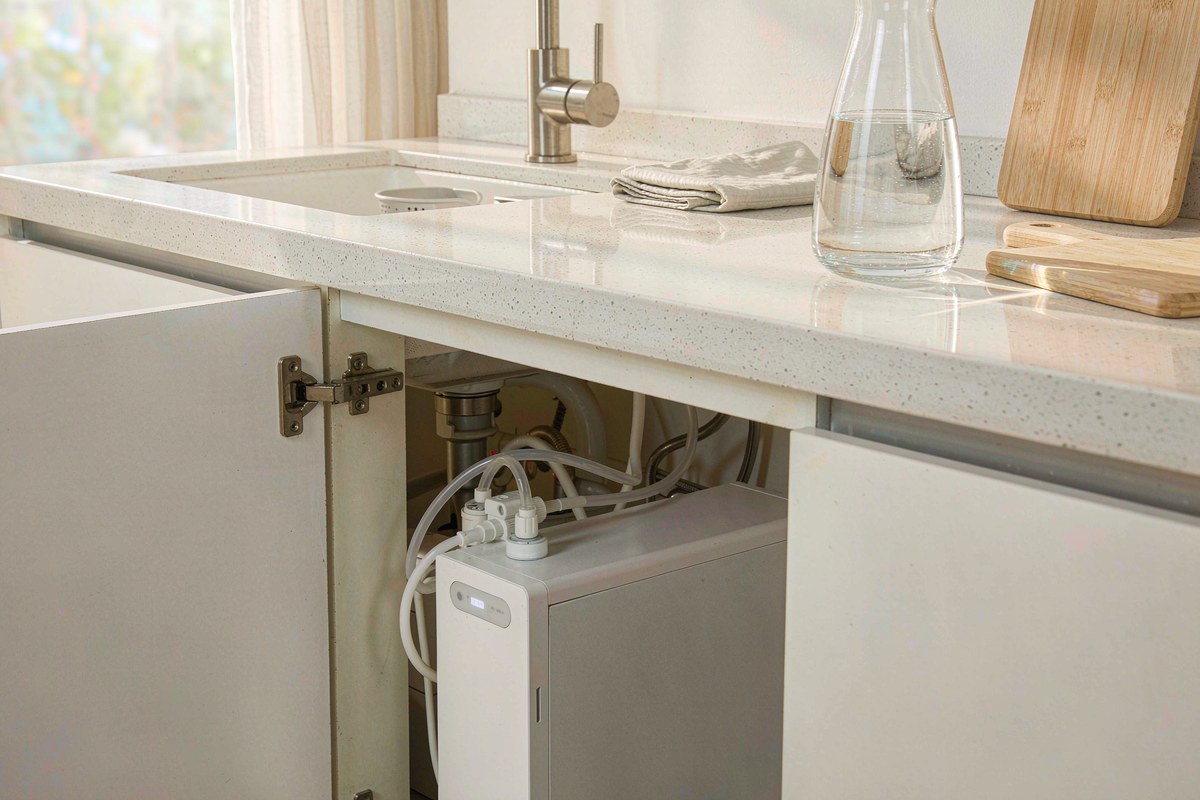
The Frizzlife 1200GPD is aimed at households that use a lot of drinking and cooking water and want a tankless under-sink system with a smart faucet. Its 11-stage design, stated 3:1 pure-to-drain ratio, and NSF/ANSI 42, 58, and 372 standards give it a more serious specification sheet than a basic pitcher or compact countertop filter.
The trade-off is price and installation complexity. This is a substantial commitment for one sink, and the 1200GPD claim should not be read as a promise that your tap will literally deliver that volume in normal kitchen use. We like the form factor and the information the faucet provides, but buyers should measure the cabinet and confirm plumbing compatibility first.
Key specs
| Product type | Tankless under-sink reverse osmosis system |
| Stated capacity | 1200GPD |
| Filtration design | 11-stage filtration |
| Pure-to-drain ratio | 3:1 |
| Faucet | Smart faucet included |
| Listed standards | NSF/ANSI 42, 58, and 372 |
| Materials claim | BPA free |
| Price at review | $679.99 |
The standards listed for this model are useful context, but they are not a substitute for checking the exact certification scope for the contaminants you care about. Buyers who are shopping specifically for PFAS reduction should read the current listing and product documentation carefully rather than assuming that every stage makes the same claim. The product is marketed as reducing PFAS, and the system also includes mineral and material-related claims in its description.
What we like
- Tankless under-sink shape. The cabinet does not have to accommodate a large storage tank, which leaves more usable room around the plumbing and cleaning supplies.
- Designed for high demand. A stated 1200GPD capacity gives this system a clear reason to exist in a household that fills bottles, cooks frequently, or has several people using the same sink.
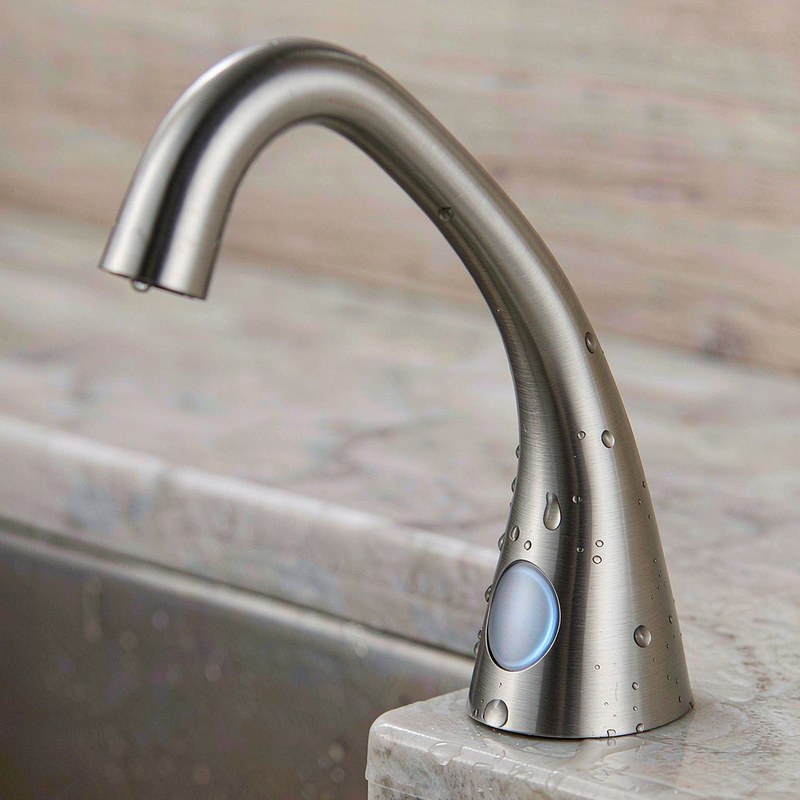
- Smart faucet feedback. A faucet that communicates system status is more useful than a silent spout when filter service is part of the ownership routine.
- Clear efficiency claim. The listed 3:1 pure-to-drain ratio addresses a common RO concern and gives buyers a concrete basis for comparing it with waste-heavy alternatives.
What we do not like
- The $679.99 price moves this well beyond a starter filtration purchase, so the value depends on whether you will use the capacity regularly.
- Under-sink installation remains a plumbing project. A tankless cabinet footprint does not eliminate the need to route tubing, provide power where required, and make space for filter access.
- 1200GPD is a product-rating figure, not a guarantee of the same real-world flow at every household tap. Water pressure, temperature, feed quality, and installation all affect what you experience.
- The 11-stage label is easy to notice but harder to interpret without a filter replacement schedule and detailed contaminant claims. Buyers should plan for ongoing maintenance rather than treating the system as a fit-and-forget appliance.
How it compares
Compared with a simple countertop purifier or pitcher, this Frizzlife is a more permanent solution. It uses the under-sink category’s main advantage: filtered water is available at a dedicated faucet without taking up counter space. That is a meaningful difference for a family that fills large bottles throughout the day. It also makes the installation commitment more consequential.
Compared with a conventional tank-style RO unit, the tankless layout is the main appeal. You are paying for a more compact cabinet arrangement and a system positioned for higher demand. The smart faucet and stated 3:1 ratio add practical reasons to consider it, while the price means a lower-cost conventional unit may still make more sense for occasional use. Our Tools & Home Improvement reviews cover other equipment where installation effort is part of the buying decision.
| Product | Price | Key spec | Who it suits |
| Frizzlife 1200GPD | $679.99 | 1200GPD, tankless, 11-stage, 3:1 ratio | High-use kitchens needing a dedicated faucet |
| Basic tank-style RO | Usually lower than this model | Stored filtered water with a tank | Buyers prioritizing initial price |
| Countertop filter | Usually lower installation cost | Portable, visible on the counter | Renters or light-use households |
Those alternatives are category comparisons rather than claims about a single competing model. The Frizzlife earns its place when cabinet installation and repeated daily use are acceptable. If you are also comparing other home equipment, our cordless vacuum review shows the same buying principle in a different category: convenience is valuable only when the routine fits your space.
Hands-on: living with a high-flow tankless RO system
The first thing we noticed was the difference between the product description and the physical job. “Tankless” sounds simple, and it does remove one bulky component from the cabinet. It does not make the system invisible. You still need a sensible location for the filtration body, room to reach the cartridges, and a clean route for water lines. Before installation, we would clear the entire under-sink area rather than trying to squeeze this into an already crowded cabinet.
That cabinet planning matters more than the headline flow figure. A system marketed at 1200GPD is designed to serve frequent demand, but a kitchen sink is not a laboratory test fixture. We treated the number as a capacity class: this is intended to keep up with regular household use rather than merely supply a glass now and then. The useful behavior is that you can use the dedicated faucet repeatedly without waiting for a storage tank to refill in the same way a tank-based design does.
| What we checked | What to look for at home |
| Cabinet fit | Clear floor and access for tubing and filter service |
| Daily use | Whether the faucet is convenient for bottles, cooking, and glasses |
| Waste-water concern | The listed 3:1 pure-to-drain ratio |
| Maintenance | A replacement plan for the 11-stage filter arrangement |
The faucet is the part of the system you interact with most. A smart faucet can turn maintenance from a vague future task into something you notice at the point of use. That is helpful, particularly in a household where more than one person uses the filtered-water tap. We would still read the indicator as a prompt to check the filters, not as proof that every water-quality concern is solved.
The listed 3:1 pure-to-drain ratio is another practical point. Reverse osmosis necessarily involves reject water, so efficiency belongs in the buying conversation alongside filtration stages. The ratio gives this unit a clearer sustainability story than a system that publishes no efficiency information. It does not mean there is no drain water, and it does not tell you how much water your household will use each month. Those totals depend on consumption.
We also looked at how the product’s claims should be interpreted. NSF/ANSI 42, 58, and 372 are prominently listed, and the product description calls out PFAS reduction and BPA-free construction. That is reassuring as a starting point, but shoppers should match the exact claim to their local water concern. A municipal-water household, a private-well household, and someone responding to a specific advisory may need different evidence. The system is not a reason to skip a water test when a test is warranted.
In everyday terms, the Frizzlife feels most rational for a household that already knows it wants under-sink RO. It is easier to justify when multiple people use filtered water for drinking and cooking, when counter space is scarce, and when a dedicated faucet is preferable to repeatedly filling a pitcher. It is harder to justify for a single occasional user who can solve the same problem with a smaller, less permanent option.
Who should buy it
Buy it if you want a tankless under-sink RO system, expect frequent filtered-water use, and value a smart faucet plus a published 3:1 pure-to-drain ratio. It is also a reasonable fit if you are willing to plan the installation and keep up with filter replacement.
Skip it if you rent, have no convenient under-sink power or plumbing access, or mainly need a single glass of filtered water now and then. The high price and maintenance commitment are difficult to defend when the capacity will sit unused.
The category is easier to navigate when you separate water-quality goals from convenience goals. For other home upgrades that compete for cabinet or floor space, see our smart ceiling light review and portable speaker review; the products differ, but the installation questions are similarly important.
FAQ
Is the Frizzlife 1200GPD a tankless reverse osmosis system?
Yes. It is an under-sink, tankless reverse osmosis system with a stated 1200GPD capacity and a dedicated smart faucet. Tankless describes the form factor, not a promise that every home installation will deliver the published figure under all conditions.
Does this system claim to reduce PFAS?
PFAS reduction is included in the product description. If PFAS is your specific concern, check the current documentation for the exact claim and scope before buying, because a general filtration description is not the same as a guarantee for every water source.
What does the 3:1 pure-to-drain ratio mean?
It means the listed ratio is three parts filtered water for one part sent to the drain. That is useful when comparing RO systems, but actual household water use still depends on how much filtered water you make and the conditions at your installation.
Is a 1200GPD RO system suitable for a small kitchen?
It can fit a small kitchen if the under-sink cabinet has enough room for the system, connections, and filter access. The cabinet footprint and service access matter more than the size of the room, so measure before ordering.
Where to buy
Update log
October 22, 2026 — Published with current listing price, rating, review count, and product specifications.

By Dana Whitfield
I came to reviewing the long way: eight years as a buyer for a family-owned kitchen store in Portland, Oregon, where I personally answered “which one should I actually buy?” a few hundred times a week. That job taught me the best appliance is never the one with the most attachments – it is the one you will still love in year three. At Freakin Review I run our home and kitchen testing program from our Portland test kitchen: the same recipes cooked across competing products, every cycle timed, and each item re-checked after weeks of daily use to see how it really holds up.