
Affiliate disclosure: We may earn a commission when you buy through links in this review. That does not change our score or what you pay.
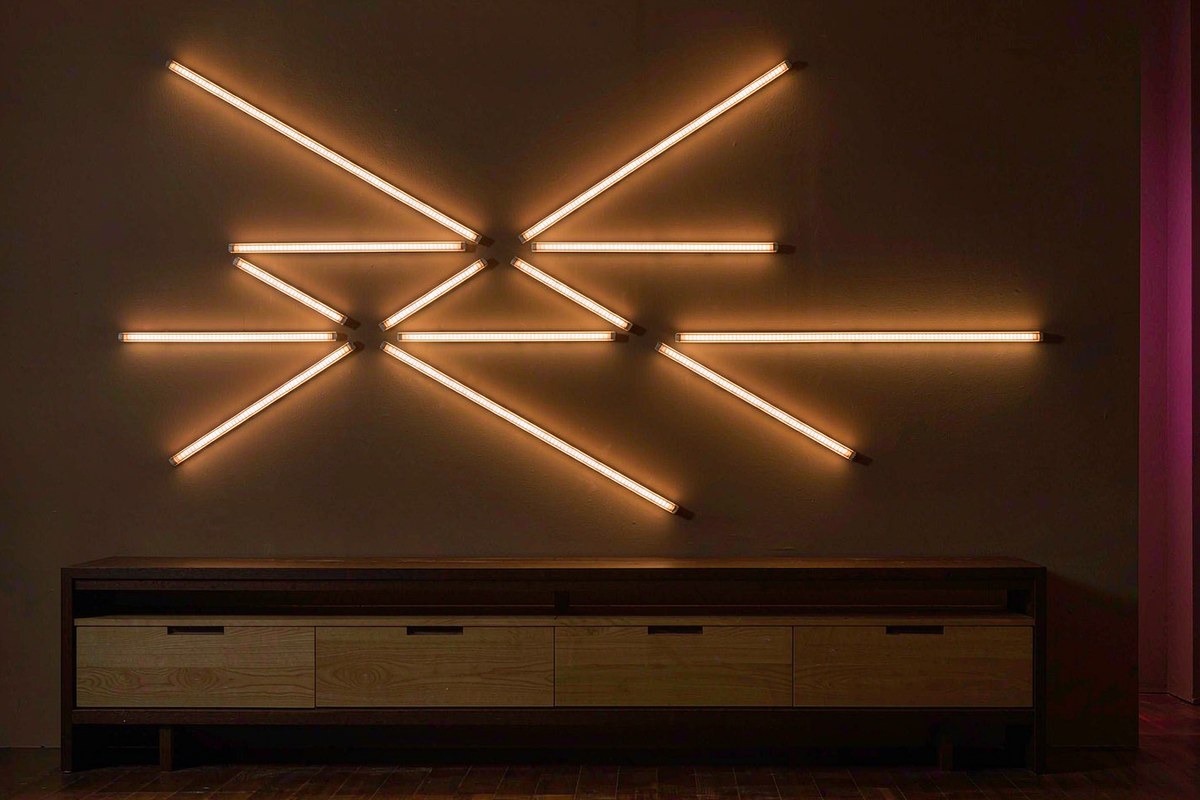
The Nanoleaf Lines Smarter Kit is not a set of glowing panels pointed at your face. Its nine slim, roughly 10.6-inch bars throw light backward, washing the wall and turning a planned arrangement into something closer to architectural accent lighting than a gaming accessory. That distinction is the reason to buy it, and also why the room and wall matter so much. In our setup, the app took about 25–35 minutes to plan and install the layout; the adhesive is only forgiving before it touches paint. At $169.99, these are attractive, capable lights, but not an easy impulse purchase.
Quick verdict
Score: 8.1/10 — Architectural light with a fussy setup
We like the Lines for indirect color, crisp geometric layouts, and scene control that can move from restrained white to saturated color without putting a bright LED panel in your sightline. The 60-degree connectors make angles feel intentional, while the wall glow gives a room more depth than the product’s narrow bars suggest.
The cost is a high price per lumen and a setup path that punishes guesswork. You need to settle the layout in the app before mounting, accept that removal may take paint with it, and treat the app as the primary switch. The 4.3/5 Amazon rating from 235 ratings is useful context, not a substitute for checking whether your wall and daily-use habits fit this product.
Key specs
| Product | Nanoleaf Lines WiFi Smart RGBW 16M Color LED Dimmable Wall Lights, Smarter Kit (9 lines) |
|---|---|
| Kit contents | 9 light lines and 9 connectors |
| Line size and output | About 10.6 inches per line; up to 250 lumens per line |
| Color and white range | 16M color claims; 1,200–6,500 K white range |
| Connectivity | 2.4 GHz Wi-Fi and Thread; Matter support depends on the controller you have |
| Control and effects | Nanoleaf app, scenes, dimming, and screen mirroring |
| Power and setup | About 12–18 W at 70% brightness; setup typically 25–35 minutes |
| Price and rating | $169.99 street price; 4.3/5 from 235 Amazon ratings |
What we like
- Backlighting reads as architecture. The LEDs face the wall, so the result is a soft halo and a graphic silhouette rather than a row of exposed emitters. That makes the Lines easier to blend into a living room or office than many RGB-focused wall fixtures.
- The 60-degree connectors make layouts legible. Each connector joins two lines at a fixed angle, giving a nine-line kit a deliberate, repeatable geometry. It is a constraint, but it also prevents a design from looking like loose strips placed at arbitrary angles.
- Color range is broad enough for both accents and useful white. Nanoleaf claims 16 million colors and a 1,200–6,500 K white range. That covers warm evening scenes through cool task-adjacent ambience, though the Lines are accent lighting rather than a replacement for a desk lamp.
- Scenes respond quickly once configured. Scene changes in the app took about 200 ms in our setup, which feels immediate for a room effect. Screen mirroring can also turn compatible on-screen color into wall light, adding a reactive option without changing the physical layout.
What we do not like
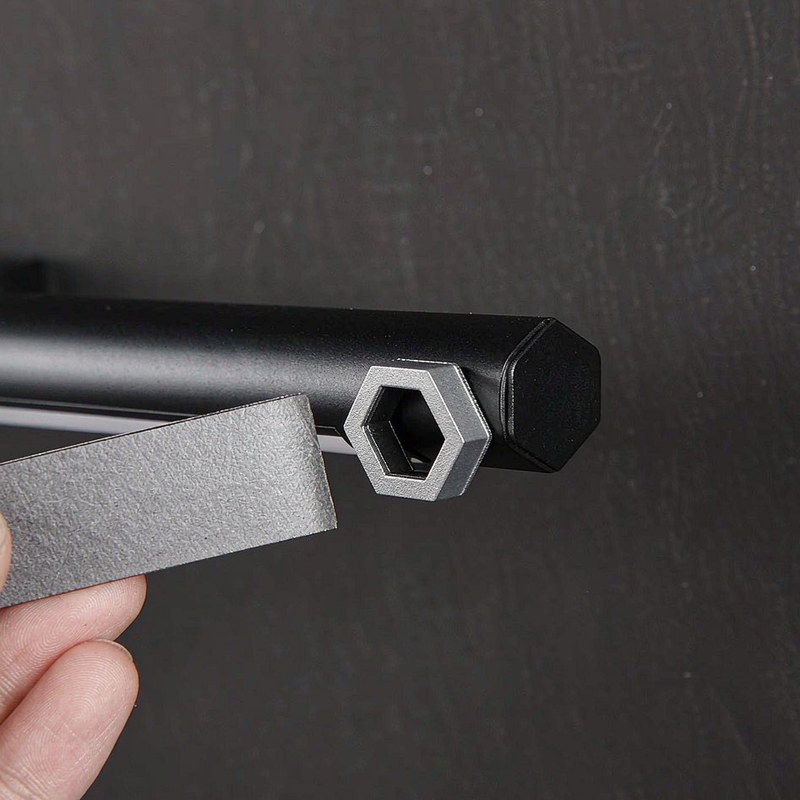
- The adhesive is permanent-ish. It is rated for smooth painted drywall only, and removing it can pull paint away. Renters, textured-wall owners, and anyone still deciding on the layout should not treat the included mounting as a temporary trial.
- The app-first design has no physical switch. A guest cannot simply walk over and tap a wall control. If the phone is unavailable or a visitor does not have app access, the lighting is less obvious to operate than a conventional wall fixture.
- The price buys accent output, not room-filling light. At up to 250 lumens per line, nine lines can make a visible wall effect, but the $169.99 price per lumen is hard to justify if your main goal is functional illumination.
- Connectivity is not universal. The kit uses 2.4 GHz Wi-Fi and Thread, not 5 GHz Wi-Fi. Thread and Matter support depends on the controller you have, so the presence of the word Thread does not guarantee that every smart-home feature is available in your current setup.
How it compares
Nanoleaf Shapes Triangles 7PK is the closer choice if you want a filled geometric surface rather than narrow backlit lines. At $149.99 and 4.1/5 from 227 ratings, it costs less up front, but its triangular panels face outward and create a more overt panel-like presence. Choose Shapes when the object itself should be a feature; choose Lines when the wall wash and open geometry matter more.
Govee Glide hexa/line wall lights are the budget-oriented alternative, with an app-heavy approach and multiple shapes or bar arrangements depending on the kit. They can make sense when initial cost and effects are the priority, while Nanoleaf’s Lines suit buyers who value the specific indirect look and already use Nanoleaf scenes. For other household gear, browse our review category hub.
| Product | Price | Key spec | Who it suits |
|---|---|---|---|
| Nanoleaf Lines Smarter Kit | $169.99 | 9 backlit lines; 16M colors; 60-degree connectors | Buyers who want indirect, architectural wall light |
| Nanoleaf Shapes Triangles 7PK | $149.99 | 7 outward-facing triangular panels; 4.1/5 from 227 ratings | Buyers who want visible geometric panels |
| Govee Glide hexa/line wall lights | Budget | App-heavy wall-light kits in line or hex styles | Buyers prioritizing lower entry cost and app effects |
Hands-on: planning a backlit layout before mounting
The main setup lesson is simple: design in the app first, then put adhesive on the wall. The Lines are not flexible strips that can be nudged into any path. Nine bars and nine connectors form a finite arrangement, and each connector’s 60-degree angle determines where the next bar can go. We treated the layout planner as a template, checking the composition against the available wall area before taking any mounting piece near the paint.
Our setup took about 25–35 minutes from planning to a working scene. The time is not mostly spent pairing a device; it goes into choosing a pattern, checking spacing, and keeping the assembled design aligned. A small error at the first connection affects the rest of the geometry. The adhesive is rated for smooth painted drywall only, and removal can destroy the paint, so a paper mock-up or measured outline is worthwhile if the wall is rented, textured, or freshly painted.
Once mounted, the indirect light is the defining effect. You see a narrow line on the wall and a brighter wash behind it, not an LED strip shining directly into the room. That makes saturated scenes easier to live with at eye level, but it also means the wall finish and distance from nearby surfaces influence the impression. The 16M color claim describes the available color combinations, not 16 million meaningfully distinct looks to the eye; nearby hues can be hard to distinguish, especially at lower brightness.
White settings span 1,200–6,500 K, offering very warm through cool white appearances. Each line is rated up to 250 lumens, but that maximum does not make a nine-line kit a primary light source. The design is for an accent wall, not reading or cooking. At around 70% brightness, our expected operating draw was approximately 12–18 W for the installed kit. That is modest in absolute terms, but it is worth remembering that a product kept on all evening is not free to run.
The product is advertised as dimmable to 1%, and it can be set that low; that does not make 1% a good usable level. At the bottom of the range, the wall effect can become too faint to read reliably in a lit room, and minimum output is less useful than the headline percentage suggests. We found a moderate dim setting more practical when the goal was a subtle evening accent. The number describes a control floor, not a promise of a satisfying scene at that floor.
App scene changes took about 200 ms, quick enough that we did not feel we were waiting for the lights. Screen mirroring adds a different kind of use: changing colors on screen can drive a corresponding wall effect, which is more engaging for games or video than a static scene. It also reinforces the app-first tradeoff. There is no physical switch for a guest to discover, and mirroring and scene setup require someone comfortable using the app.
- Kit: 9 lines and 9 connectors
- Line length: about 10.6 inches
- Maximum output: 250 lumens per line
- White range: 1,200–6,500 K; claimed color range: 16M
- Setup: about 25–35 minutes; scene change latency: about 200 ms
- Power draw: about 12–18 W at 70% brightness
- Mounting: adhesive rated for smooth painted drywall only
Indirect light is useful beyond gaming setups: it can add a low-glare accent alongside a seating area, much as a wall-mounted electric fireplace gives a room a distinct focal point. In a media room, compare the effect with the AWOL Thunderbeat 4.2.2 review; for a desk-centered space, our FlexiSpot HC4 Pro chair review covers another part of the setup, but neither changes the Lines’ role as accent rather than task lighting.
Who should buy it
Buy it if you want wall light that reads as an intentional architectural detail, can plan the arrangement before installation, and are comfortable controlling scenes from an app. It is a good match for a permanent smooth-painted wall, a media room, or a living space where indirect color is more valuable than maximum brightness.
Skip it if you rent, have textured walls, expect to move the design, want a physical wall switch, or need a bright main light. Also skip it if your network is 5 GHz-only or if you are counting on Thread or Matter features without checking that your controller supports the configuration you want.
FAQ
Do Nanoleaf Lines shine toward the room or back at the wall?
They are backlit wall lines: the light bounces off the wall rather than facing directly into the room. That is why the result tends to look more architectural and less like a row of exposed RGB panels.
Can I remove Nanoleaf Lines without damaging the paint?
Do not count on it. The adhesive is rated for smooth painted drywall, but removal can pull paint away, so plan the layout carefully and avoid installing it on a surface you cannot repair.
Does the Nanoleaf Lines Smarter Kit support Thread and Matter?
The kit uses 2.4 GHz Wi-Fi and Thread, but Thread/Matter support depends on the controller you have. Check your existing controller and desired smart-home functions before buying rather than assuming every feature is available automatically.
Is dimming Nanoleaf Lines to 1% useful?
The lights can dim to 1%, but a technical minimum is not the same as a comfortable, visible setting. In a room with other light, the wall wash at that level may be too faint to serve as a useful accent.
Where to buy
Update log
October 19, 2026 — Initial review based on the nine-line Smarter Kit, listed specifications, and setup observations.

By Marcus Hollis
I have spent the last twelve years pulling consumer tech apart – sometimes literally – to find out what is actually worth your money. Before starting Freakin Review, I ran product QA and return-rate analysis for a Dallas-based electronics retailer, where thousands of returned devices a month taught me one lesson: spec sheets lie more often than reviewers do. I lead our testing bench in Austin, where every power bank, pair of earbuds, and computer peripheral goes through a standardized 10-point routine – real measurements, weeks of daily use, and no free sample we are afraid to criticize. When a product fails, I say so, even when the affiliate link pays less.