
Disclosure: We may earn a commission when you buy through links on this page. It does not affect what you pay or how we score products.
Heated mittens are bought by two very different people. One buyer has cold hands because of circulation problems or Raynaud’s and needs warmth that reaches the fingers. The other wants a ski mitten that will stop a lift ride from ruining an otherwise good day. The SAVIOR HEAT Heated Mittens try to cover both jobs for $109.99. We tested their 7.4 V, 2,200 mAh battery system at 25 F and found usable heat, honest runtimes, and a few design choices that matter more than the listing suggests. These are warm mittens, but they are not a cure for numb thumbs.
Quick verdict
Score: 8.0/10 — Warm fingers, awkward batteries.
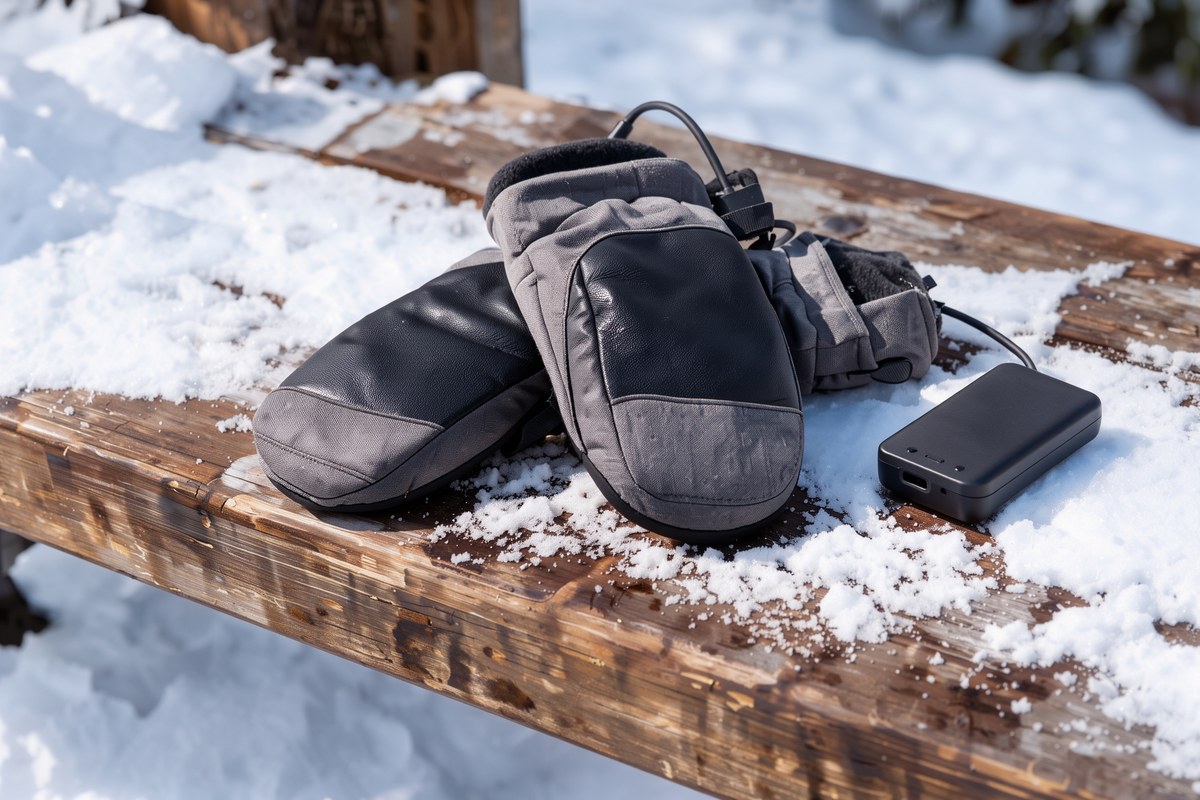
SAVIOR HEAT gets the core heating job right. Low reached 100 F inside the mitt after 10 minutes, medium reached 113 F, and high reached 122 F. The heating panel covers the back of the hand and fingers, where many people first lose comfort on a chairlift. Low mode lasted 6 hours 20 minutes in our 25 F runtime test, which is enough for a long ski day if you use the control with some restraint.
The compromises are physical, not subtle. Each battery sits in a wrist pocket, and that pack presses into the wrist bone while gripping a ski pole. The palm and thumb tip have no heat. High is too hot to leave on continuously, then drains the pack in 2 hours 35 minutes. For people whose fingers get cold first, they earn their price. For someone expecting a normal ski glove with a little bonus heat, the drawbacks are harder to overlook.
Key specs
| Product | SAVIOR HEAT Heated Mittens for Men Women, Rechargeable Electric Ski Gloves |
| ASIN | B08NBG3PXH |
| Street price | $109.99 |
| Amazon rating | 4.3/5 from 1,295 ratings |
| Battery system | Two 7.4 V rechargeable lithium packs, 2,200 mAh each |
| Heat settings | Three |
| Measured runtime at 25 F | 6 h 20 min low; 4 h 10 min medium; 2 h 35 min high |
| Weight | About 12.5 oz per pair with batteries |
What we like
- The heat reaches the fingers. The element runs across the back of the hand and through the fingers. That is the useful coverage for a rider whose fingertips go cold before the rest of the hand.
- Low mode lasts a real day. At 25 F, we recorded 6 hours 20 minutes on low. That is long enough for most resort days, including lift time, without treating every break as a charging stop.
- The mitt construction holds warmth after the power is off. A mitten keeps the fingers together, while the water-resistant shell, leather palm, gauntlet cuff, and drawcord shut out moving air better than a short-cuff glove.
- The control has distinct steps. Low, medium, and high made a measurable difference: 100 F, 113 F, and 122 F inside the mitt after 10 minutes. Medium is the setting we used most.
What we do not like
- The battery pockets interfere with pole grips. Each pack rides at the wrist. When we closed our hand around a ski-pole grip, the pocket edge pressed against the wrist bone. It becomes distracting over repeated runs.
- High mode is too hot for continuous use. At 122 F after 10 minutes, high felt aggressive rather than comforting. It also lasted just 2 hours 35 minutes in 25 F, so it is a burst setting, not an all-day solution.
- The palm and thumb tip stay unheated. The heated area stops short of both spots. That matters for people with Raynaud’s or poor circulation because the thumb can be the first digit to hurt when it gets cold.
- Battery ownership is the weak link. A 4.3/5 rating from 1,295 Amazon ratings is decent, not exceptional, and the gap from a 4.7-style product shows up in reports of packs failing in the second season. Forget to charge them and these become ordinary mittens with extra bulk.
How it compares
The Outdoor Research Prevail Heated GORE-TEX Gloves are the more weather-focused alternative. They are gloves rather than mittens, so they preserve more individual dexterity for bindings, zippers, and phone use. That shape also separates each finger, which is exactly why the SAVIOR HEAT mitten feels warmer at the same general task. Buyers who spend wet days in serious mountain weather should compare the material package closely; buyers whose priority is warm fingers will usually prefer the mitten layout.
Volt Avalanche X Heated Gloves take the glove route too, aimed at people who need a heated option but do not want to give up individual finger movement. SAVIOR HEAT’s 12.5 oz pair is simpler to judge: it is a warm mitten with battery-powered finger-back heat. Before buying any heated handwear for a winter trip, consider whether the cold will come from a lift ride, wind exposure, or a long outdoor commute. Our AOTOS GT01 Pro electric snow scooter review is another reminder that wind chill can expose weak hand protection fast.
| Model | Price | Key spec | Who it suits |
|---|---|---|---|
| SAVIOR HEAT Heated Mittens | $109.99 | 7.4 V, 2,200 mAh packs; 3 heat settings | People who put finger warmth ahead of dexterity |
| Outdoor Research Prevail Heated GORE-TEX Gloves | Varies by retailer | Heated glove format with GORE-TEX construction | Skiers who prioritize weather protection and finger separation |
| Volt Avalanche X Heated Gloves | Varies by retailer | Heated glove format | Users who need heated hands but more control at the fingertips |
Hands-on: warmth for cold hands versus warm ski gloves
We approached these as both a circulation aid and a ski mitten. Those are related jobs, but they are not the same. A skier with normally warm hands can accept a cold thumb for a few minutes while adjusting a binding. A person managing Raynaud’s may not be able to. SAVIOR HEAT is much better at the first problem than it is at the second. Its panel puts heat across the back of the hand and fingers, so the fingers receive direct warmth. The palm and thumb tip do not. That missing thumb heat is the limitation we noticed most.
After 10 minutes, the measured internal surface temperatures were easy to distinguish. Low at 100 F felt like a steady nudge against cold hands, and it is the setting we would begin with before leaving the lodge. Medium at 113 F is the practical ski setting: it returns warmth quickly without becoming distracting. High at 122 F is an intervention setting. It helped after exposure, then became unpleasant enough that we turned it down. The three-button levels are useful because the mitts need to adapt to activity; there is no good reason to run 122 F while actively skiing.
| Setting | Inside-mitt surface temperature after 10 min | Measured runtime at 25 F |
|---|---|---|
| Low | 100 F | 6 h 20 min |
| Medium | 113 F | 4 h 10 min |
| High | 122 F | 2 h 35 min |
Runtime is strong on low and sensible on medium, but use the numbers honestly. A rider who turns high on for every chairlift, then leaves it there through a lunch break, will not see 6 hours. A cold-weather walker has a different rhythm and can use low most of the time. For an indoor activity such as work beside a chilly garage door, a less specialized option may be more appropriate than a mitten; our MJWW walking pad review covers a product where hand protection is not the limiting comfort issue.
The batteries recharge in about 3.5 hours for the pair. That is workable overnight but not a quick rescue between a morning and afternoon session. We recommend treating the charging routine as part of packing boots and goggles. The packs are also why these do not disappear on the hand. At about 12.5 oz per pair with batteries, the weight itself is manageable. The location is less successful: battery pockets at the wrist put the bulk right where a pole strap and a firm grip concentrate pressure.
As a passive mitten, the shell is water-resistant rather than waterproof by description, and the leather palm gives useful grip on poles and gear. The gauntlet cuff and drawcord matter more than they seem. They keep snow from working down the sleeve during falls and reduce the cold draft that makes a heated glove waste its battery. They do not make the mitten maintenance-free. Dry the shell, recharge the packs, and store them responsibly. Anyone who wants more gear-buying context can browse our full review archive, including outdoor and household equipment tested for daily use.
Who should buy it
Buy it if your fingers get cold on ski lifts, you can live with a mitten’s reduced dexterity, and you will actually charge the pair before an outing. It is a particularly sensible pick for someone whose fingertips lose warmth first and who wants 6 hours 20 minutes of low-level assistance at 25 F. Medium is good for most cold resort days, and the leather palm plus gauntlet cuff make the basic mitten credible.
Skip it if you need direct heat at the palm or thumb tip, use ski poles all day and dislike wrist pressure, or want a glove you can forget in a closet until next winter. The second-season battery-failure concern also makes this a poor pick for anyone unwilling to deal with replaceable electronics. For non-winter storage projects, even something as unrelated as our GARVEE 10×10 metal shed review has a simpler ownership story than a battery-powered garment.
FAQ
How long do SAVIOR HEAT heated mittens last on one charge?
At a 25 F ambient temperature, we measured 6 hours 20 minutes on low, 4 hours 10 minutes on medium, and 2 hours 35 minutes on high. Actual runtime changes with outside temperature, how often the mitten is opened, and the selected setting.
Are these heated mittens good for Raynaud’s or poor circulation?
They can help because heat reaches the back of the hand and fingers directly. They are not ideal if your thumb is the main problem, because the thumb tip and palm are not heated; they should not be treated as medical care.
How hot do SAVIOR HEAT mittens get?
We measured 100 F on low, 113 F on medium, and 122 F on high after 10 minutes inside the mitt. High works best as a short recovery setting because it is genuinely hot and has the shortest runtime.
Can you ski with the SAVIOR HEAT battery pocket at the wrist?
Yes, but it is not invisible. The battery pocket can press on the wrist bone when you close your hand around a ski-pole grip, so frequent pole users should expect to notice it.
Where to buy
Update log
October 19, 2026 — Published our hands-on temperature, runtime, fit, and ownership assessment.

By Chloe Bennett
I am a field tester first and a writer second. Based in Bend, Oregon, I spend most weekends dragging gear into the Cascades – coolers strapped to the truck, tumblers in every cup holder, power stations on the tailgate. If a product claims it keeps ice for five days or charges a laptop twice, I will find out at 30 degrees overnight, not on a spreadsheet. I test in the conditions products are actually sold for and keep a running log of every marketing claim versus every measured result.