
Disclosure: We may earn a commission if you buy through links on this page. That does not affect our testing or verdict.
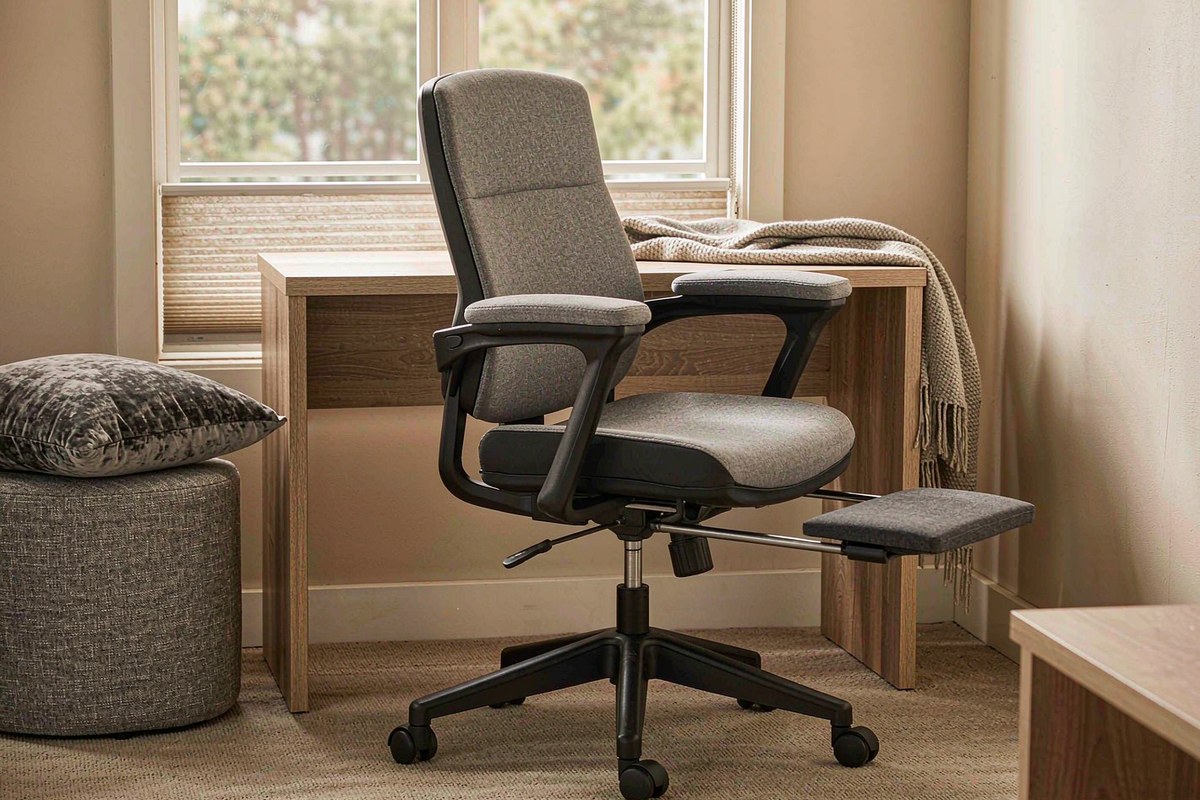
The Hayelf is built around a use case most office chairs treat as an afterthought: sitting cross-legged, or tucking one foot under the other leg. Its 25-inch-wide seat gives that posture room, and a retractable footrest adds somewhere to put your feet when you lean back. Those details matter more here than the long list of ergonomic labels. We measured the usable seat depth at 21.5 inches and spent three hours moving between upright desk work and reclined breaks. Cross-legged comfort held for about 90 minutes before the front edge pressed into the calf. That is a useful stretch, not an all-day guarantee.
Quick verdict
Score: 7.5/10 — A roomy chair for changing how you sit
The Hayelf earns its score through seat width, useful recline and an unusually practical footrest at a $159.99 street price. It is a better fit for people who regularly fold a leg onto the seat than a typical narrow task chair, and the hand-pumped lumbar bladder lets you tune firmness without tools.
There are meaningful compromises: the lumbar bladder gradually loses pressure, the fixed armrests limit positioning, and the footrest can wobble under a heavy leg. The listing has only 6 owner ratings, so there is no meaningful owner consensus yet; we lean on our own build and use testing, and long-term durability remains unknown.
Key specs
| Product | Ergonomic Criss Cross Office Chair with Retractable Footrest & Air Lumbar, 25" W wide seat, armrests, home office desk chair |
| Brand and ASIN | Hayelf; B0H4GNKK28 |
| Street price | $159.99 |
| Seat pan | 25 in wide; 21.5 in usable depth |
| Seat height | Adjusts from 17.3 to 21.3 in |
| Backrest and footrest | Reclines to about 135 degrees with a 3-position lock; footrest extends 9.5 in and is rated to about 40 lb |
| Support and capacity | Hand-pumped air lumbar bladder; gas lift rated to 300 lb |
| Weight and setup | 38 lb; assembly took 25-35 minutes with the included wrench |
What we like
- The seat gives folded legs real room. At 25 inches wide, the pan accommodates cross-legged sitting better than a conventional narrow task-chair seat. We measured 21.5 inches of usable depth, enough to shift position without immediately feeling perched on the edge.
- The recline works for breaks. The back reaches about 135 degrees and locks in 3 positions. That range provides a distinct change from desk posture, rather than a small, barely noticeable tilt.
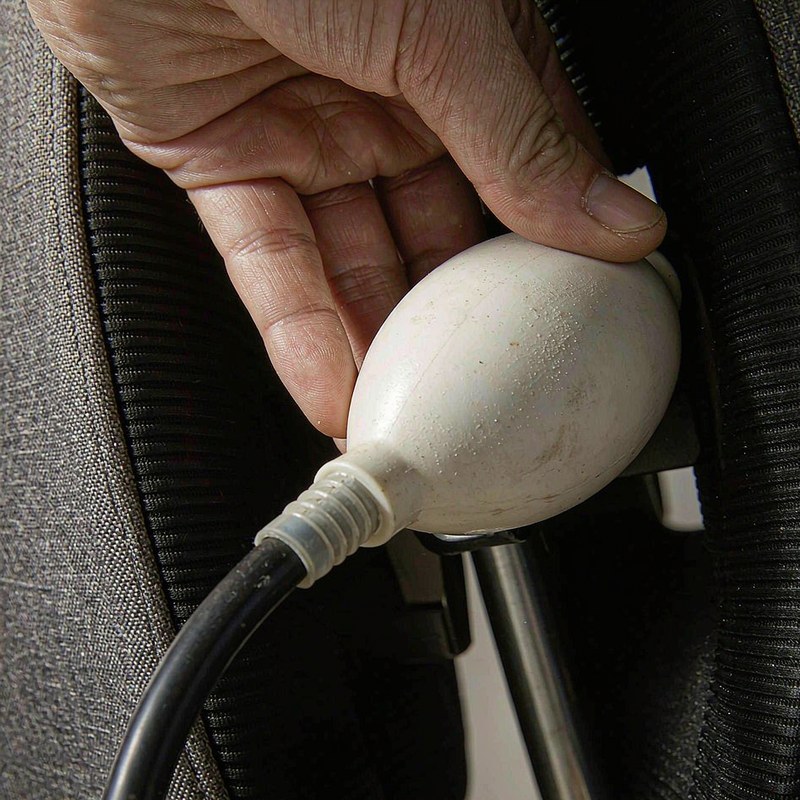
- The lumbar firmness is adjustable. The air bladder pumps by hand; about 12 squeezes made it feel firm in our setup. You can add or release air to change pressure, without relying on a fixed foam bulge.
- The footrest is genuinely useful. It slides out 9.5 inches, creating a place to rest the feet during a reclined break. Its roughly 40-pound rating is adequate for feet, and it retracts when you want the chair back under the desk.
What we do not like
- There is no meaningful owner consensus. The Amazon listing has only 6 ratings and shows 5.0/5, but that small, new-listing sample cannot establish reliability or long-term comfort. Buyers have little independent history to consult, and wear over months remains unverified.
- The lumbar bladder needs upkeep. We noticed pressure fading over a few days, so the bladder had to be pumped again to restore the same support. That is a recurring chore, and anyone expecting set-and-forget lumbar support may find the adjustment frustrating.
- The armrests and lumbar position are not very adjustable. Armrests are fixed in height and have no fore-aft adjustment; the mesh back also has no independent adjustable lumbar height. If their positions do not suit your body or desk, the bladder cannot move the support zone to compensate.
- The footrest and base show cost compromises. The footrest wobbles under a heavy leg, while the 5-Star base is nylon rather than aluminium. The 2-inch PU casters rolled quietly on hard flooring in our use, but marked soft pine, so protect delicate wood and do not treat the base material as a durability upgrade.
How it compares
The closest comparison is about posture, not a contest in brand names. The FLEXISPOT HC4 Pro is a reclining office chair, so it is the more relevant alternative if your priority is leaning back; the Hayelf is the more specific choice if you need extra seat width to tuck a leg up. Our FLEXISPOT HC4 Pro review covers that recliner-focused tradeoff. We are not assigning unsupported current prices or dimensions to either rival here.
The KORSER Recliner Chair is another option for users who want a chair built around lounging rather than a standard desk posture. The Hayelf retains a desk-chair format and its seat geometry is the core reason to choose it; if your main goal is a recliner-style seat, compare that priority against our KORSER Recliner Chair review. For a broader browse, the reviews hub collects other tested products.
| Chair | Price | Key spec / distinction | Who it suits |
|---|---|---|---|
| Hayelf Criss Cross | $159.99 | 25 in wide seat; retractable footrest; hand-pumped lumbar | People who sit cross-legged or tuck one foot under |
| FLEXISPOT HC4 Pro | Not stated here | Reclining office-chair alternative; verify current listing for exact configuration | Buyers prioritizing a recliner-style office chair |
| KORSER Recliner Chair | Not stated here | Recliner-chair alternative; verify current listing for exact configuration | People focused more on lounging than wide-seat desk posture |
Hands-on: cross-legged comfort over a three-hour session
We judged the chair on how its geometry supports a changing seated posture, not on how many ergonomic terms fit on the listing. The 25-inch pan is the headline measurement, but the 21.5-inch usable depth matters too: width gives a bent knee somewhere to go, while depth affects where the seat edge meets the lower leg. In practice, the wide surface made it easy to alternate between a conventional position and sitting with one leg folded up.
During a three-hour session, cross-legged seating stayed comfortable for about 90 minutes. After that, the front edge began pressing into the calf. The distinction is important: the chair accommodates this posture much better than a typical narrow chair, but the pan shape does not eliminate pressure during an uninterrupted long stretch. Changing position helped; this is still a chair for people who shift around, not a promise that one folded-leg pose stays comfortable all afternoon.
The seat height adjusts from 17.3 to 21.3 inches. We found that range useful for setting the feet down at a desk, then changing posture when the seat was raised. The backrest reclines to about 135 degrees and offers a 3-position lock, which gave us a repeatable upright, intermediate and deeper-rest position. It is a practical break feature, though the chair is not a substitute for matching desk height and monitor position to your normal working posture.
The lumbar system is an inflatable bladder behind the mesh. About 12 hand-pump squeezes brought it to a firm setting in our test; the advantage is that firmness is adjustable. The limitation is that pressure eased over a few days and needed replenishing. There is no independent height adjustment for the lumbar zone, so pumping changes how prominent the support feels, not where it contacts your back.
The retractable footrest projects 9.5 inches and is rated to about 40 pounds. It supported feet during reclined breaks, but it wobbled when a heavier leg loaded it. Treat it as a light-duty rest, not a platform for pushing against or transferring your full body weight. The chair itself weighs 38 pounds, and assembly took 25-35 minutes using the included wrench. The 2-inch PU casters rolled quietly on hard floor; on soft pine they left marks, making a floor mat sensible for vulnerable wood.
- Seat: 25 in wide; 21.5 in usable depth
- Seat-height range: 17.3-21.3 in
- Recline: about 135 degrees; 3-position lock
- Footrest: 9.5 in extension; about 40 lb rating
- Lumbar setup: about 12 pumps to firm; re-pumping needed after pressure faded over a few days
- Capacity and setup: 300 lb gas-lift rating; 38 lb chair; 25-35 minutes to assemble
The overall build feels consistent with a value-oriented chair: the gas lift is rated to 300 pounds, but the nylon 5-Star base is less reassuring than an aluminium one if material choice is a priority. We cannot infer service life from the rating, and the listing’s six ratings do not fill that gap. The strongest evidence for this purchase is therefore the fit and feature set you can assess now; long-term durability is still an open question.
Who should buy it
Buy it if you regularly sit cross-legged, fold a leg onto the seat or tuck one foot under, and a typical narrow chair feels restrictive. The 25-inch width, 21.5-inch usable depth and 17.3-21.3-inch height range give you room to experiment with posture, while the footrest and recline suit short rest breaks. Check the fixed armrest position against your desk before buying.
Skip it if you need lumbar support that stays at a chosen firmness without maintenance, adjustable armrests, a stable foot platform under heavy loading or proven long-term owner feedback. If you have delicate soft-pine flooring, budget for a chair mat. For a desk setup built around standing as well as sitting, see our FLEXISPOT E6 Max standing desk frame review; a sit-stand frame changes the work pattern more fundamentally than a recline feature.
FAQ
Is the Hayelf chair comfortable for sitting cross-legged?
Its 25-inch-wide seat gives folded legs more room than a conventional narrow task chair. In our three-hour session, the position stayed comfortable for about 90 minutes before the front edge pressed into the calf, so expect to shift posture during longer work blocks.
How do you adjust the Hayelf air lumbar support?
You pump the bladder by hand; about 12 squeezes made it firm in our setup. Pressure faded over a few days and needed re-pumping, and the bladder does not let you adjust lumbar height independently.
Does the Hayelf footrest support your full weight?
The footrest extends 9.5 inches and is rated to about 40 pounds, making it suitable for resting feet rather than supporting a full-body push. We also noticed wobble under a heavy leg, so use it gently and retract it when not needed.
Is a 5.0 rating from six Hayelf reviews reliable?
Not by itself. The listing is new and has only 6 owner ratings, which is not enough for meaningful owner consensus or a conclusion about long-term durability; our score leans on our own build and use testing instead.
Where to buy
Update log
October 19, 2026 — Initial review based on assembly, measurements and a three-hour use session. The Amazon listing had 6 ratings; long-term durability remains unverified.

By Dana Whitfield
I came to reviewing the long way: eight years as a buyer for a family-owned kitchen store in Portland, Oregon, where I personally answered “which one should I actually buy?” a few hundred times a week. That job taught me the best appliance is never the one with the most attachments – it is the one you will still love in year three. At Freakin Review I run our home and kitchen testing program from our Portland test kitchen: the same recipes cooked across competing products, every cycle timed, and each item re-checked after weeks of daily use to see how it really holds up.