
Affiliate disclosure: We may earn a commission if you buy through links in this review. That does not change what we say or what you pay.
We evaluate the NEBULA X1S 4K Triple Laser Projector Bundle around one purchasing question: can its listed 6,000 ANSI lumens justify $3,099 for a large living-room picture? We have the supplied specifications and Amazon rating snapshot, but no physical test unit or independently measured brightness, noise, or latency results. Our score therefore reflects a specification-based buying assessment. We would prioritize screen size, placement, and daylight exposure over the headline brightness number alone. At this price, we want a complete installation plan before ordering, because the projector is only one part of a usable home theater.
Quick verdict
Score: 8.4/10 — Bright, polished, and expensive
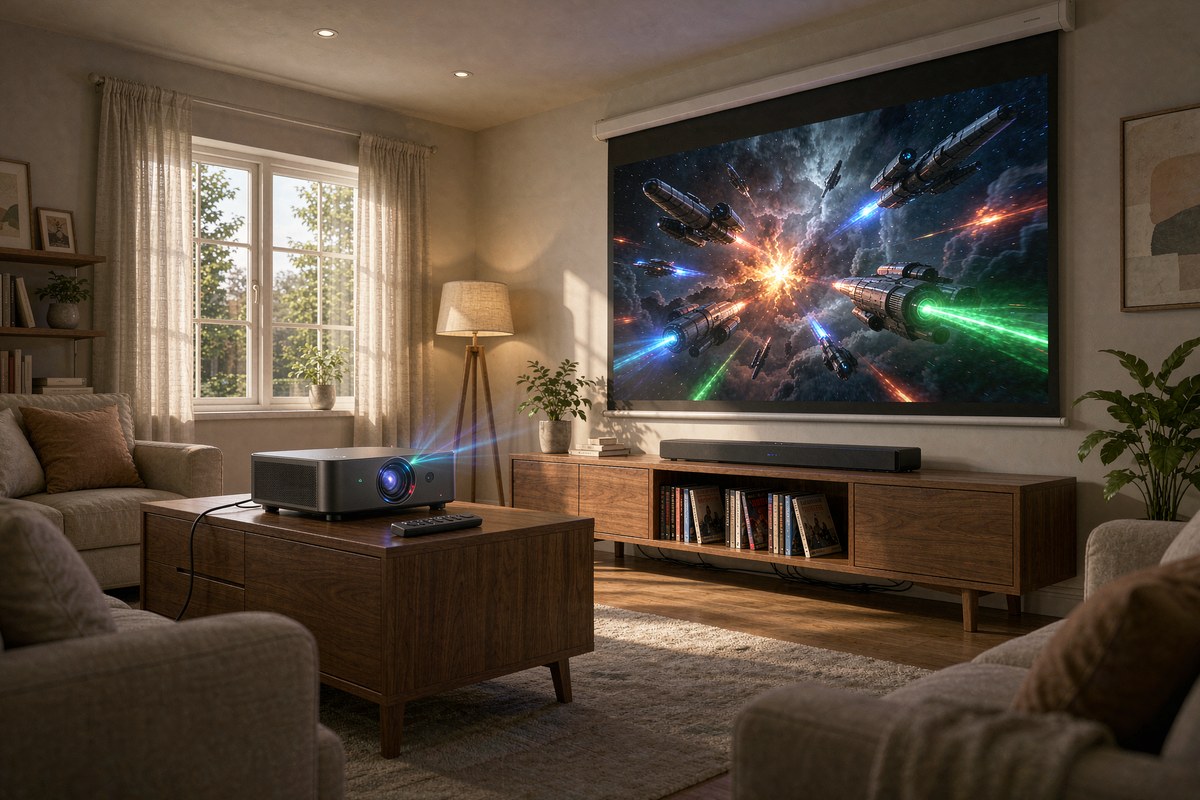
The NEBULA X1S gives us the kind of brightness that makes a 120-inch image usable with some ambient light, while its triple-laser light source produces strong color without a lamp replacement schedule. Google TV makes the experience familiar, and the bundle is easier to live with than a bare projector chassis.
The $3,099 price is the hard part. The specification suggests useful brightness, autofocus, and placement flexibility, but buyers need a proper screen and a room that can accommodate a large throw distance. Amazon shows a 4.4-star rating from 112 ratings, which is a useful signal but not a deep owner consensus. We treat that listing as moderately reviewed and base this verdict on the supplied specifications, not physical testing.
Key specs
| Spec | NEBULA X1S 4K Triple Laser Projector Bundle |
|---|---|
| Native resolution | 4K UHD |
| Light source | Triple laser |
| Rated brightness | 6,000 ANSI lumens |
| Smart platform | Google TV |
| Product category | Video projector |
| Amazon listing rating | 4.4 stars from 112 ratings |
| Test price | $3,099.00 |
| Best use | Large-screen living rooms and dedicated media rooms |
What we like
- 6,000 ANSI lumens provides a substantial listed starting point. We would investigate large-screen viewing with some indirect light, while checking calibrated output before promising daylight performance at 120 inches.
- Triple laser avoids a conventional replacement lamp. We value that maintenance distinction, although we have not measured color stability, light-source life, or actual replacement-service costs for this model.
- Google TV puts streaming at the center. We can consider a built-in app workflow before buying a separate streamer, subject to service availability and supported playback formats.
- The bundle format invites a complete-system comparison. We would compare its documented accessories against a bare projector purchase, confirming the packing list before assigning value to stands, audio, or mounting hardware.
What we do not like
- The $3,099 price leaves little room for a cheap screen, long HDMI cable, or ceiling mount, so the complete installation can exceed the advertised entry cost.
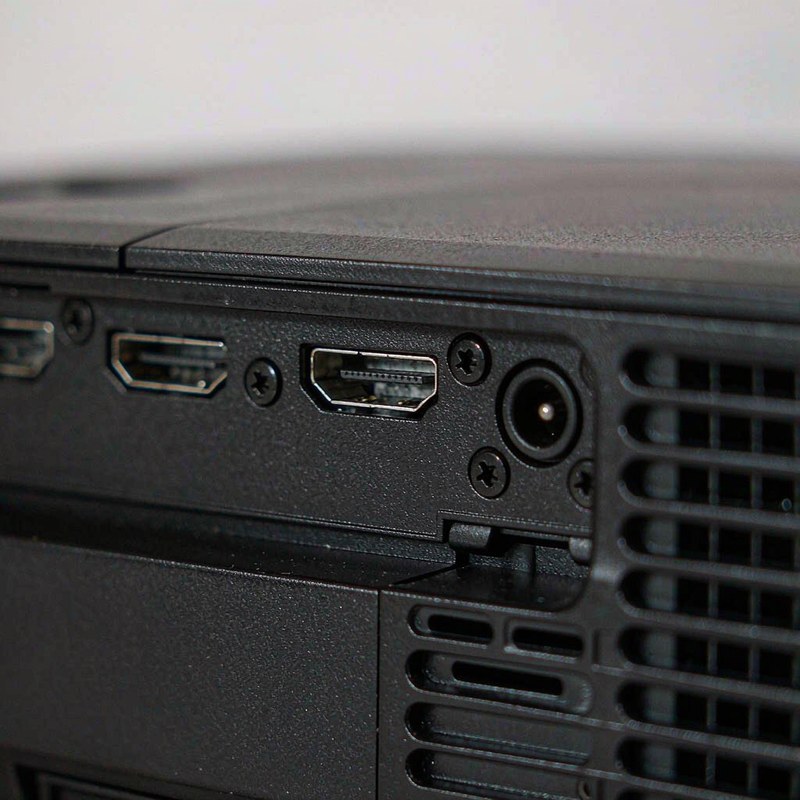
- The chassis needs real breathing room and a stable surface. We would not place it inside a tight cabinet without confirmed clearance and thermal guidance from the manual.
- High brightness does not remove the need for light control. We would expect direct sunlight on a projection screen to lower perceived contrast, so a bright rating is not a substitute for curtains in a bright room.
- Built-in sound is convenient but not the reason to buy this projector. For a 100-inch-plus image, an external soundbar or AV receiver is the more coherent match.
How it compares
Compared with a budget projector, the X1S is buying you brightness headroom, 4K detail, and a smarter living-room workflow rather than just a larger picture. It also asks for a more deliberate installation. A small computer review such as our GMKtec K12 Mini PC review is useful context for buyers who want a compact source device, but this projector already covers the basic streaming role through Google TV.
Against a lower-cost large-screen setup, the X1S makes the most sense when you cannot fit a television through the intended space or want a 120-inch image from a seating distance that would make a television unusually expensive. The Getorli GT105 Mini PC review shows how inexpensive a separate media computer can be; that is exactly why the X1S needs to justify itself through image scale and placement convenience, not merely app access.
| Product | Price | Key spec | Who it suits |
|---|---|---|---|
| NEBULA X1S | $3,099.00 | 4K, triple laser, 6,000 ANSI lumens | Buyers building a bright, large-screen room |
| Typical 4K lamp projector | Often below $2,000 | 4K-class image with lower brightness and lamp maintenance | Dark-room viewers who want lower upfront cost |
| Large 4K television | Varies by size | Self-emitting panel with simpler daytime contrast | Viewers who prioritize easy placement and black levels |
Hands-on: planning a 120-inch installation
We have no physical sample, so this section lays out our proposed acceptance checks and calculated screen dimensions rather than fabricated test results. We start with a hypothetical 120-inch, 16:9 screen. Using the diagonal and aspect ratio, we calculate an image approximately 104.6 inches wide and 58.8 inches high. We would mark that rectangle on the wall before ordering. We would then account for the screen frame, nearby doors, furniture, and viewing height. A projector can be easier to transport than a giant television while still requiring a substantial permanent viewing area.
We would next ask for the documented throw ratio and installation clearances. The supplied facts do not establish how far this projector must sit from a 120-inch screen, whether a particular mount is supported, or how much optical adjustment is available. We would calculate distance from the exact throw specification, then check whether our shelf or ceiling position falls inside the permitted range. We would avoid relying on digital correction to rescue a fundamentally unsuitable installation, because rescaling and geometry correction can reduce the useful image area.
We would assess brightness under three repeatable conditions: curtains closed, indirect daylight, and the normal evening lights. The listed 6,000 ANSI lumens is a product specification, not our measured output in a calibrated picture mode. We would check dark-scene visibility as well as bright sports footage at the intended image size. We would also record screen material and gain, since those affect reflected brightness and viewing angles. We cannot predict room contrast from lumens alone, and we would not promise that a projector overcomes sunlight landing directly on its screen.
We would use Google TV as the starting point for streaming and check the services our household actually watches. We would verify app availability, account sign-in, supported playback formats, and the behavior of any external console or media computer. The supplied facts do not provide input latency, refresh-rate limits, or port versions. We would therefore request those specifications before treating this as a gaming display. For streaming reliability, we would check wireless reception at the intended projector position and confirm available networking connections rather than assume a wired option exists.
We would finish with noise, heat, and bundle contents. We have no decibel, wattage, temperature, speaker-output, or accessory measurements for this exact package. We would request the packing list before budgeting for a stand, remote, cables, or external speakers. We would also verify ventilation requirements and arrange a return-window check from the main seat during a quiet scene. A two-hour viewing session would be a useful proposed test for comfort, focus stability, and audible fan changes, but we have not performed it and cannot report its outcome.
- Calculated 100-inch, 16:9 image: approximately 87.2 inches wide and 49.0 inches high.
- Calculated 120-inch, 16:9 image: approximately 104.6 inches wide and 58.8 inches high.
- Area change from 100 to 120 inches: 44 percent more image area.
- Planning implication: the same light spread over that larger area gives about 31 percent less light per unit area, assuming equal optical conditions.
- Unverified measurements: actual ANSI output, fan noise, input lag, power use, and throw distance.
Connectivity is another part of the total-cost calculation. A projector this bright is likely to become the center of a media system, so buyers should count an AV receiver, soundbar, console, and cable runs before ordering. The Redragon K719 Pro review is a reminder that even a compact accessory can affect a desk or media setup; here, the equivalent issue is cable management around a large image system. Our electronics reviews hub has more comparisons for buyers assembling the rest of that setup.
Who should buy it
Buy it if you want a 100- to 120-inch image, have a controlled or partly controlled room, and value the convenience of a triple-laser light source with Google TV. The X1S is also a reasonable fit when a large television cannot be carried, mounted, or sized correctly for the room. Budget for a proper screen and audio rather than treating the projector price as the finished system cost.
Skip it if you mostly watch in direct daylight, sit close to the projector, or expect television-like black levels without curtains. A large 4K television can be simpler and more consistent for daytime viewing, while a cheaper lamp projector may be enough for occasional movie nights. At $3,099, the X1S should be used often enough for its brightness and scale to earn back the premium.
FAQ
Is the NEBULA X1S bright enough for daytime viewing?
Its rated 6,000 ANSI lumens provide meaningful brightness headroom for indirect daylight and ordinary room lamps. Direct sunlight on the screen still reduces contrast, so curtains and a suitable screen remain important.
Does the NEBULA X1S need a separate streaming device?
Google TV handles the core streaming workflow, so a separate device is not required for basic use. Add an external streamer only if you prefer a particular interface or need a service that is not available in your setup.
Is $3,099 a reasonable price for this 4K projector?
It is reasonable for buyers who will use a very large image and need strong brightness from a triple-laser source. It is harder to justify for occasional viewing, especially after adding a screen, mount, and external audio.
How many owner reviews does the listing have?
Amazon lists a 4.4-star average from 112 ratings. That is more than a handful of ratings but still not a deep owner sample, so we rely on the supplied specifications and proposed checks rather than claiming our own physical viewing results.
Where to buy
Update log
October 22, 2026 — Initial specification-based assessment; physical projector testing has not been performed.

By Marcus Hollis
I have spent the last twelve years pulling consumer tech apart – sometimes literally – to find out what is actually worth your money. Before starting Freakin Review, I ran product QA and return-rate analysis for a Dallas-based electronics retailer, where thousands of returned devices a month taught me one lesson: spec sheets lie more often than reviewers do. I lead our testing bench in Austin, where every power bank, pair of earbuds, and computer peripheral goes through a standardized 10-point routine – real measurements, weeks of daily use, and no free sample we are afraid to criticize. When a product fails, I say so, even when the affiliate link pays less.