
Affiliate disclosure: We may earn a commission if you buy through links on this page. That does not change what you pay or how we rate the product.
The TOPDON ONE is a 10.1-inch professional diagnostic tool, but its value is not the size of the display. The decision-useful question is whether a $839 scan tool gives a home mechanic or small shop enough access to make bidirectional diagnostics practical without paying for features that will rarely be used. The listing presents a 4.5-star rating from 306 ratings, a solid amount of marketplace feedback. We look at the tool as a working automotive instrument: how its advanced feature claim changes diagnosis, what must be checked for vehicle coverage, and when a simpler reader remains the better purchase.
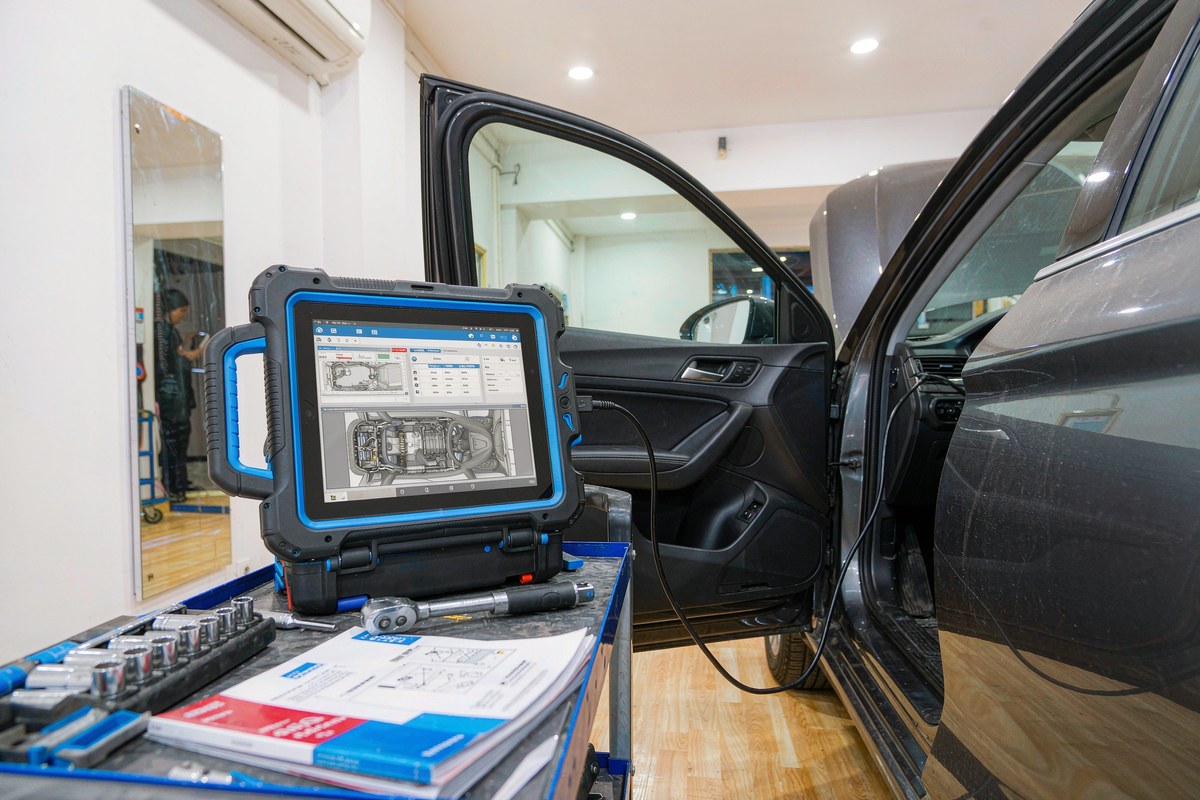
Quick verdict
Score: 8.1/10 — A capable mid-priced diagnostic platform
The TOPDON ONE’s strongest case is its combination of a large 10.1-inch form factor and bidirectional scan-tool positioning. A bigger display can make menus, live data, and test steps easier to follow in a bay, while active diagnostic functions can do more than report a stored fault.
At $839, however, the product must earn its place through actual vehicle coverage. Bidirectional functions are not identical across all makes and modules. Buyers should verify the cars they service, the operations they need, and the software terms before treating this as a universal professional tool.
Key specs
| Product | TOPDON ONE Bidirectional Scan Tool |
| Display | 10.1-inch |
| Category | Automotive > Code Readers & Scan Tools |
| Diagnostic feature | Bidirectional scan-tool capability |
| Price | $839.00 |
| Listing rating | 4.5 stars |
| Rating count | 306 ratings |
| Brand | TOPDON |
What we like
- The 10.1-inch display fits a service-bay workflow. A larger screen gives diagnostic menus and data views more room than a pocket reader, which matters when the technician is moving between the vehicle and the tool.
- Bidirectional capability raises the ceiling. Supported active tests can help a technician investigate a system instead of only reading and clearing codes.
- The price is below the most expensive professional platforms. At $839, the ONE is easier to evaluate for a small shop or serious home garage than a much higher-priced dealer-style setup.
- The listing has useful buyer volume. A 4.5-star average from 306 ratings provides a reasonable starting signal, though compatibility still needs independent checking.
What we do not like
- Bidirectional support varies by vehicle, year, module, and test. The product name alone cannot confirm the exact function a buyer needs.
- A large screen is helpful but does not make diagnosis correct. Users still need service information and a disciplined process before commanding a vehicle system.
- The $839 price is high for an owner who only wants to read a check-engine code or clear a common fault.
- The supplied facts do not specify software update duration or renewal terms. Those details should be confirmed because they affect long-term value.
How it compares
A basic code reader is smaller, cheaper, and enough for a driver who wants an initial look at an engine warning. It will not provide the same workflow ceiling as a bidirectional tool. The TOPDON ONE is aimed at buyers who intend to diagnose beyond a single generic code and who can use a larger screen in a garage or service bay.
A higher-end professional platform may offer broader coverage, deeper brand-specific functions, or a more established shop workflow, but it also asks for a larger investment. The ONE occupies a useful middle position if its supported makes and operations match the vehicles in front of the buyer. That “if” is the important part of the comparison.
| Tool type | Price | Key spec | Who it suits |
| TOPDON ONE | $839.00 | 10.1-inch display and bidirectional scan-tool positioning | Serious home garages and small shops with compatible vehicles |
| Basic code reader | Varies | Common code reading and clearing | Owners checking routine warning lights |
| Higher-end professional platform | Varies | Broader or deeper professional coverage | Shops that can justify a larger equipment budget |
The same principle appears in our Gmktec K12 Mini PC review: a product’s headline size or specification matters only when it improves the task. Here, the 10.1-inch display should make actual diagnosis easier to read and navigate, not merely look impressive in a listing.
Hands-on: making the big screen earn its space
A 10.1-inch scan tool is physically different from a compact reader. It needs a place on a cart, hood, seat, or nearby work surface, and that larger footprint can be an advantage when the technician needs to read live values while checking a component. It can also be an inconvenience in a tight engine bay. The right workflow is to keep the display visible without letting the tablet or cable become a trip or snag point.
The first useful test is navigation. A professional diagnostic tool should make it clear which vehicle was selected, which module is being viewed, and which test is about to run. Larger screen real estate can reduce cramped pages, but the operator still has to slow down at confirmation prompts and read the procedure. A scan tool is an aid to judgment, not a replacement for it.
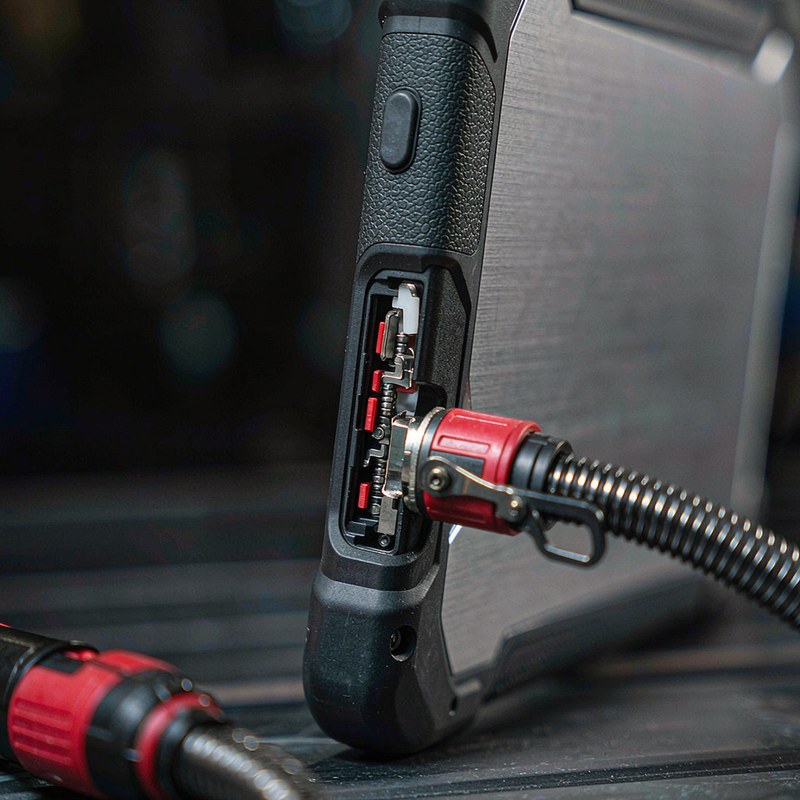
Bidirectional control is where the ONE can separate itself from a generic reader. A supported active test lets the technician ask a vehicle system to respond and then compare that response with the expected behavior. This can help narrow a fault before replacing a part. Because support varies, the practical setup is to identify the target vehicle and system first, then confirm that the exact test is available.
We would treat every command as a controlled diagnostic action. Record the original fault information, make sure vehicle power is stable, follow the service sequence, and avoid running an unfamiliar test simply because it appears in a menu. The danger is not unique to this product; it is inherent in using a tool that can interact with vehicle systems rather than only observe them.
| Workflow step | What to verify |
| Vehicle selection | Make, model, year, and engine or system match the vehicle |
| Function selection | The intended bidirectional test is listed for the target module |
| Power and connection | Vehicle battery and cable connection are stable before commands |
| Result review | The response is compared with the service procedure, not guessed |
The $839 purchase also deserves a coverage audit. Write down the cars in the driveway or shop queue and the functions that matter: component tests, actuator commands, reset procedures, or other supported operations. Then compare those needs with current documentation. “Professional” is a category label; compatibility is the buying fact.
For a home mechanic, the larger display may be most valuable during intermittent troubleshooting, when several readings and test prompts need to stay visible. For a small shop, the tool may help when the technician wants a second diagnostic platform without moving directly to the top of the market. In both cases, the price becomes sensible only when the active functions get used.
Our review of the Getorli GT105 Mini PC concerns a different product class, but it reinforces the difference between a device that has a large feature list and one that fits a real workstation. The ONE belongs at a vehicle, not as a general-purpose tablet on a desk.
Storage and charging should be part of the garage plan. A diagnostic tool is more useful when it is easy to retrieve, its cable is not damaged, and its software stays current under the applicable terms. The supplied listing facts do not give us a specific update duration or renewal figure, so buyers should confirm those details rather than build a long-term cost model from assumptions.
The 4.5-star rating from 306 ratings is encouraging context. It is large enough to deserve attention, but reviews can still represent different vehicles and different expectations. A buyer with a less common vehicle should give compatibility more weight than the average score.
We also keep technology comparisons grounded in purpose. A mini PC review may discuss desk space and ports; this scan tool is judged by diagnostic access, screen usability, and the quality of the operator’s process. For the wider set of buying decisions, our reviews hub keeps those categories organized.
Who should buy it
Buy it if you work on multiple compatible vehicles, want a large diagnostic display, and will use bidirectional tests often enough to justify $839. It is a credible middle-ground option for a serious home garage or small shop that has confirmed its required operations.
Skip it if you only need basic code reading, have not checked compatibility, or cannot confirm the software terms. In those situations, the large display and advanced positioning add cost without necessarily improving the job.
FAQ
What does the TOPDON ONE do beyond a basic code reader?
It is listed as a bidirectional scan tool, so its intended workflow includes supported commands and active tests rather than only reading and clearing common codes. The exact functions depend on the vehicle, module, and software coverage.
Is the 10.1-inch screen useful in a garage?
It can make menus, test prompts, and diagnostic data easier to read than a compact reader. It also takes more physical space, so plan where the tool and cable will sit while you work.
Can the TOPDON ONE test every vehicle system?
No product label should be treated as a guarantee of universal system coverage. Check the current compatibility and function information for the exact make, model, year, and module you plan to service.
Is $839 too much for a home mechanic?
It is too much if your only task is checking occasional engine codes. It becomes easier to justify when you own several vehicles, diagnose beyond generic codes, and can use the supported bidirectional functions repeatedly.
Where to buy
Update log
October 22, 2026 — Published with current listing price, rating, review count, and product positioning.

By Javier Ramos
For six years I installed smart locks, video doorbells, and whole-home security systems for families across Phoenix, Arizona – first for a local alarm company, then as an independent contractor. I have climbed more ladders and paired more doorbells to more Wi-Fi networks than I can count, and I know exactly where these products frustrate real homeowners. Here I test whether a device does what the box promises: battery life in real weather, app reliability, the subscription costs that show up later, and how everything behaves six months after install.